
Your cart
There are no more items in your cart
- New
Inverter Chargers 48V-230V
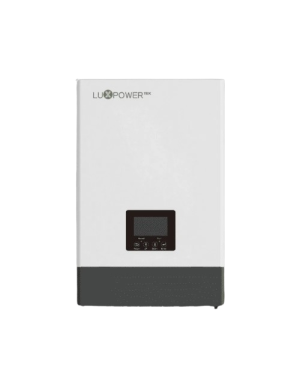
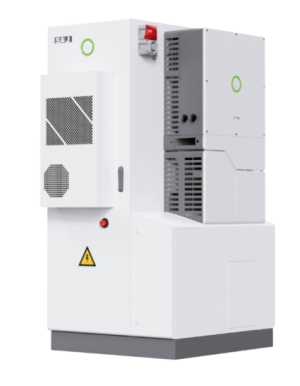
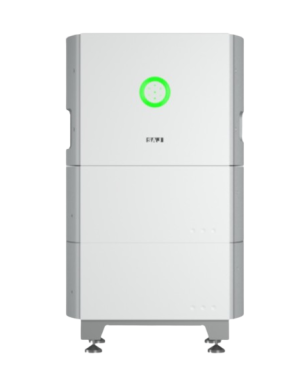
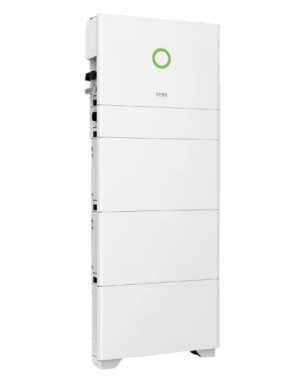
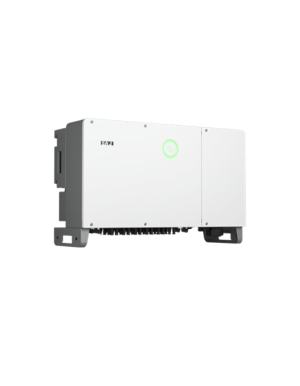
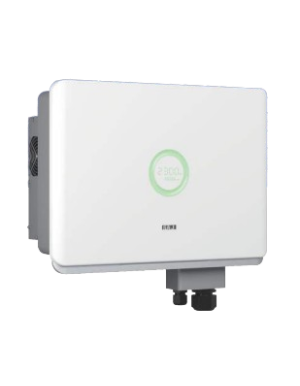
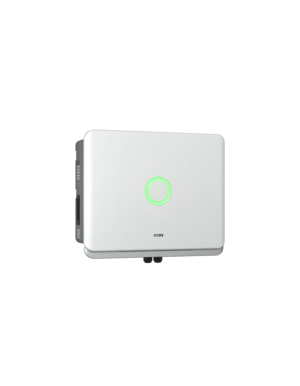
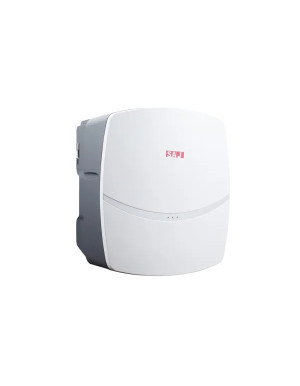
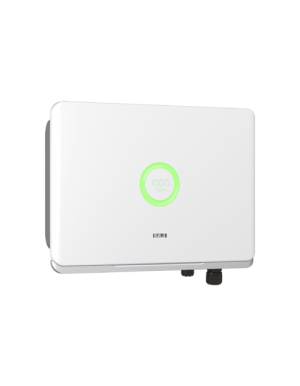
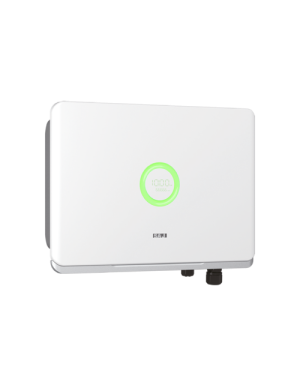
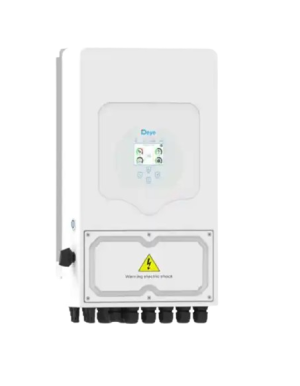

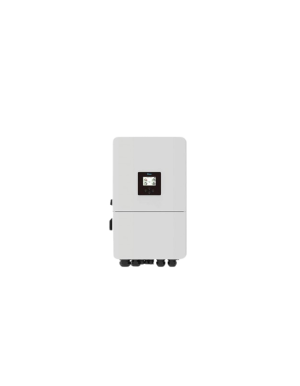
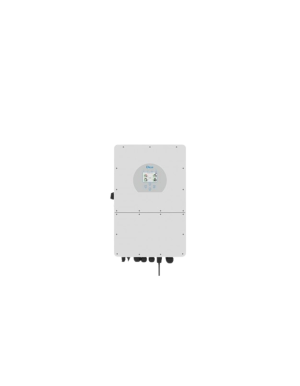


Choosing the inverter is the most important technical decision in a PV system. It determines production, whether you can add batteries, backup during power cuts and grid compliance. This guide covers everything the Tienda Solar technical team checks before recommending a unit, whether it is for your home or you are an installer looking for the exact model for a project.
Choose your inverter in 4 questions
A PV inverter is a power electronic converter. Solar panels generate direct current (DC), and the inverter turns it into 50 Hz alternating current (AC), synchronised with the grid or forming its own grid in an off-grid system. Today's inverters do much more than convert:
We organise our catalogue into five families according to the type of installation.
The most common choice for self-consumption in homes, residential buildings, warehouses and businesses. They convert your solar energy and you use it as it is produced. Any surplus is exported to the grid (surplus compensation) or limited with a zero-export system.
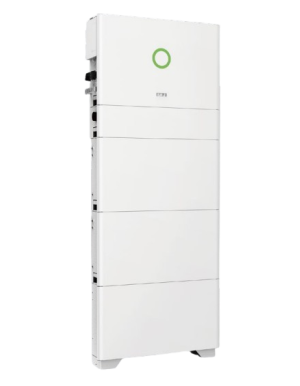
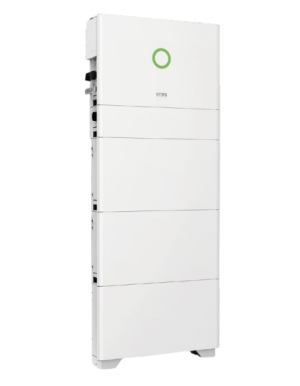
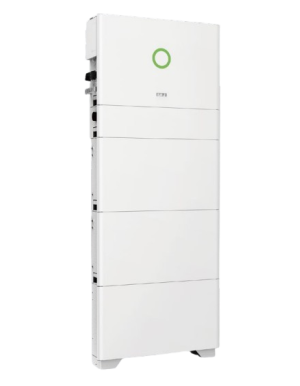
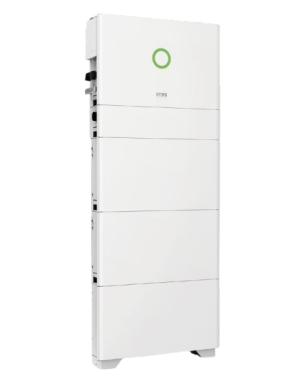
They manage solar panels, lithium battery and grid at the same time. During the day they cover your consumption and charge the battery with the surplus; at night they use the stored energy. They are the most versatile option and the fastest-growing segment of the residential market.
They create their own 230 V grid from a battery bank, with no connection to the utility grid. They are used in country houses, mountain huts, campervans, farms and solar pumping systems. Inverter/chargers add a charger so the batteries can be recharged from a generator or the grid. Many all-in-one models also include the MPPT solar charge controller.
A microinverter converts to AC right next to each panel (or every 2–4 panels). Each module works independently: if one is shaded, the rest keep producing at full output.
They are installed behind each panel and adjust its operating point on the DC side, while a central inverter still handles the conversion to AC. They combine panel-level optimisation with the price of a string inverter. Note: they normally have to be the same brand as the inverter (for example, SolarEdge with SolarEdge or Huawei with Huawei), so always check compatibility.
Also: if you are looking for a no-installation solution for a flat or balcony, take a look at our plug & play batteries with built-in inverter.
| Feature | Grid-tied | Hybrid | Off-grid / charger | Microinverter |
| Needs the grid | Yes | Yes (some can also run off-grid) | No | Yes |
| Batteries | No (except AC coupling) | Yes, optional or expandable | Essential | No (except AC coupling) |
| During a blackout | Shuts down | Keeps backup circuits powered (with battery) | Not affected | Shuts down |
| Shading | Sensitive (better with several MPPTs or optimizers) | Sensitive (better with several MPPTs) | Depends on charge controller | Very tolerant |
| Cost per kW | Lowest | Medium | Medium–high | High in large systems |
| Typical peak efficiency | 97.5–98.8% | 97–98.5% | 93–96% | 96–97.5% |
| Typical use | Daytime self-consumption, businesses | Homes with night-time consumption | Country houses, campervans, pumping | Complex roofs, small kits |
Indicative values. Always check the datasheet of the specific model.
The basic rule is simple: the inverter must match your supply. You can see it on your electricity bill or in your consumer unit: a single-phase supply has a 2-pole main breaker and a three-phase supply has a 4-pole one.
Sizing is based on your consumption and the panel capacity (kWp). It is common and advisable to install more panel power than inverter power (DC/AC ratio). Panels rarely deliver their rated power, and slight oversizing keeps the inverter working closer to its optimal point for more hours a day.
| Annual household consumption | Indicative panel capacity | Indicative inverter |
| 2,500–3,500 kWh | 2.5–3.5 kWp | 2.5–3.6 kW |
| 3,500–5,500 kWh | 3.5–5.5 kWp | 3.6–5 kW |
| 5,500–8,000 kWh (heat pump, electric car) | 5.5–8 kWp | 5–6 kW single-phase or 6–8 kW three-phase |
| Over 8,000 kWh | 8 kWp or more | 8–12 kW single- or three-phase |
Estimate for mainland Spain with south orientation and approximate production of 1,300–1,600 kWh per kWp per year. Calculate your case with our solar calculator.
Here consumption is what matters, not the panels. Add up the power of the appliances that will run at the same time and add a 20–30% margin.
The "12 V, 24 V or 48 V" of an inverter refers to the battery bank voltage, not the panel voltage. The higher the voltage, the lower the current for the same power, which means thinner cables, lower losses and less heat.
| Battery voltage | Typical inverter power | Typical use |
| 12 V | Up to about 1,500–2,000 W | Campervans, boats, sheds, lighting |
| 24 V | 2,000–3,000 W | Second homes with moderate consumption |
| 48 V (low voltage) | 3,000–12,000 W or more | Off-grid homes and LV residential hybrids |
| High voltage (HV, approx. 150–800 V) | 5–50 kW or more | Residential and commercial hybrids with modular batteries |
With hybrids, inverter–battery compatibility is critical: matching voltage is not enough, they also need to communicate (CAN or RS485) through the BMS. Use the "Compatibility list" filter on this page or browse our lithium batteries.
| Parameter | What it means | What to look for |
| Max. DC voltage | Maximum voltage the PV input accepts (typically 550–600 V on single-phase and 1,000–1,100 V on three-phase units). | The string Voc at the site's minimum temperature must never exceed it. Panel voltage rises in winter. |
| MPPT voltage range | Voltage window in which the inverter extracts maximum power. | The string Vmp must stay within the range in both summer and winter. |
| Max. current per MPPT | Amps each input accepts (operating current and short-circuit current Isc). | Today's 450 W+ panels run at around 13–18 A. Look for 16–20 A or more per MPPT, or dual inputs if you will connect strings in parallel. Filter by "Max input current (A)". |
| Number of MPPTs | Independent inputs, each with its own tracking. | One MPPT for each different orientation or tilt. Two or more give design flexibility. |
| Peak and European efficiency | Peak is the best operating point. European efficiency (η EU) is an average weighted by partial loads. | Compare the European figure: it better reflects real production over the year. |
| Backup power (EPS) | Power available when the grid goes down (hybrids only). | It may be lower than rated power. Also check the switchover time. |
| Battery charge and discharge current | Maximum amps to and from the battery (hybrids and chargers only). | It limits the real battery power. For example, 100 A at 48 V is about 5 kW. |
| IP rating and cooling | Ingress protection (IP65/IP66 = suitable for outdoors) and type of cooling: natural or fan-assisted. | If it will be near bedrooms, choose natural cooling, which is silent. |
| Communications | WiFi, LAN, 4G, RS485 or Modbus. | Check whether the monitoring module is included or sold separately, and whether you need a power meter for zero export. |
| Certificates and warranty | Grid connection conformity certificates and years of manufacturer warranty. | Essential for registering the installation in Spain (see next section). Check whether an extended warranty is available. |
Self-consumption in Spain is governed by Royal Decree 244/2019. For the inverter, the most relevant points are:
It depends on the type, and it is one of the most frequent questions:
We recommend having the installation carried out by a qualified professional. You will find more information in our technical guides.
Almost all current inverters include or support a WiFi, LAN or 4G module and a free app: FusionSolar (Huawei), VRM (Victron), SEMS (GoodWe), SolaXCloud (SolaX), Solarman (Deye and others), iSolarCloud (Sungrow), Enphase App or S-Miles Cloud (Hoymiles). With them you can see:
Many models also let you schedule battery charging during off-peak hours, manage an EV charger or a heat pump with surplus energy, and integrate with home automation systems.
Complete your system with solar panels, batteries, mounting structures or a complete solar kit with the inverter already selected.
A quality string inverter usually lasts 10 to 15 years, and many exceed that with a good location (shade and ventilation). Microinverters have longer service lives and warranties. The standard manufacturer warranty ranges from 5 to 10 years depending on the brand, and some manufacturers offer extensions.
It depends on three limits on the datasheet: the maximum PV power, the maximum DC voltage (which sets how many panels fit in series) and the maximum current per MPPT (which sets whether you can connect strings in parallel). For example, a 5 kW inverter typically takes between 5.5 and 6.5 kWp. Send us your panel model and we will work out the configuration.
There are two options: replace the inverter with a hybrid, or keep it and add an inverter/charger or a battery with its own inverter using AC coupling. If you are just starting out and think you will want batteries, go straight for a hybrid: you will save on equipment.
No. The inverter must match your supply. A three-phase unit needs all three phases to work.
Yes. Single-phase generation of up to 15 kW is allowed in Spain, and we have 8, 10 and 12 kW single-phase hybrids. Make sure you choose the exact single-phase part number, as there is often a three-phase version with a very similar name.
Only if you choose self-consumption without surplus, or if your distribution company or project limits export. If you opt for surplus compensation it is not mandatory, although many inverters still use the power meter to optimise self-consumption and manage the battery.
Yes, as long as they are on different MPPTs. Within a single string, all panels must be identical (same power, current and orientation). If there is a lot of variety, microinverters or optimizers are the best solution.
Naturally cooled units are practically silent. Fan-cooled or high-power units emit an audible hum when running at full load. If it will be near a bedroom, choose a fanless model or install it in a garage, storage room or outdoors in the shade.
Very little: keep vents and heat sinks clean, check alarms in the app, update the firmware when the manufacturer recommends it and check connections during the installation's periodic inspections.
It is the component with the most electronics in the system and the one most likely to need attention at some point. At Tienda Solar we help you diagnose the fault and file the warranty claim with the manufacturer, so the process gets moving as quickly as possible.
Not sure which inverter to choose? Tell us your supply type, consumption, panels and whether you want batteries, and we will recommend the exact model. Get free advice →

