
Your cart
There are no more items in your cart
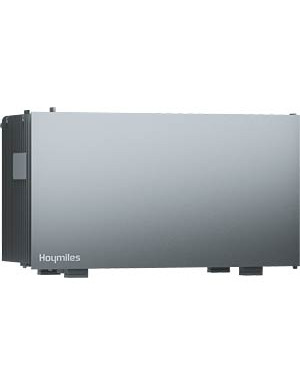
- New
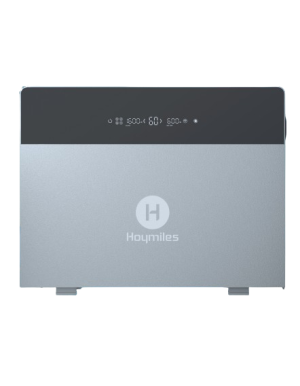
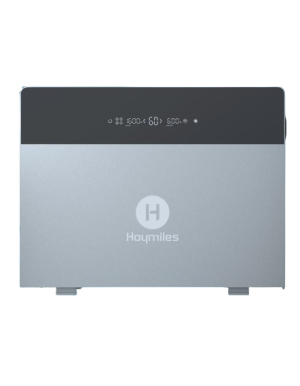
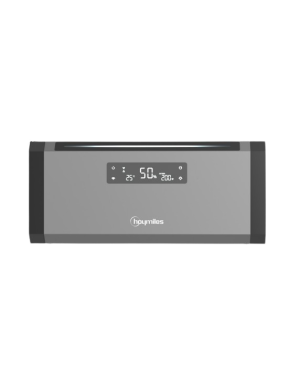
Optia through a compact and modular storage system against conventional accumulation banks provides determining operating advantages for small and medium-scale installations:
Direct installation and portability: Without requiring heavy workmanship or starters of rozas, the plug-in battery it connects in minutes. Is the ideal solution for rental housing or facilities in terraces combined with
Smart management of the download: Incorporate microinverters two-way or integrated regulators that dose the power output (adjustable 100W A 800W or higher depending on the model) so as not to pour energy over the network without remuneration, optimizing the zero pouring.
Modular extension Extensible: Systems allow the addition of parallel or stacking expansion modules, passing from base capabilities of 1kwh until you overcome 4kwh or 6kwh according to the thermal and electrical needs of the house.
Chemical safety and resistance: Made exclusively with cells Lifepo4, offer the highest thermal stability of the market, eliminating the risk of thermal leakage and exceeding in performance
Universal compatibility: They work as a perfect complement for both new balcony kits and existing facilities that operate with
To correctly dimension a battery for balcony or a domestic accumulator Plug & Play, It is essential to analyze three mechanical and electrical variables:
Calculate the continuous consumption of your home during hours without solar radiation (refrigerator, router, stand-by appliances). An average household consumes between 1.5kwh and 3kwh during the night. Choosing an adjusted capacity module guarantees that the battery is completely recharged during the day with the production of its
The continuous discharge rate determines how many teams you can feed simultaneously. Most of the batteries Plug and Play they allow you to limit the delivery of power through a mobile application, synchronizing with an intelligent meter (smart) To inject only the exact watts that housing is demanding in every second.
If the battery is going to be installed in the weather (terraces or balconies without enclosure), verify that it has minimal protection Ip65 and, in cold climates, evaluate models with integrated autocentalization system to allow load at low zero temperatures without degrading lithium cells. For greater projects or isolated installations, you can compare these specifications with our
The plug-in accumulators of our inventory meet the highest regulatory standards of the European Union:
Chemistry of Cells: Iron and lithium phosphate (Lifepo4).
Life cycles: ≥ 6000 cycles to 80% DOD.
Rountrip Efficiency: Top 95% in loading / unloading processes.
DC operating voltage: Adaptable ranges from 16V to 60V (compatible with tickets standard Solar).
Degree of protection: Case with certification Ip65 resistant to UV and rain-ray.
Communications: Integrated connectivity 2.4 GHz Wi-Fi, , Bluetooth 5.0 and ports Can / rs485.
Fabric Guarantee: Limited Warranty Coverage 10 years.
The installation is direct. Solar plates are connected to the MC4 inputs of the battery (or its intermediate regulator) and the battery is plugged into a conventional housing outlet using a Schuko cable. The system automatically manages solar energy, sending it to the battery or injecting it to the network of the house.
Yes, the batteries Plug and Play they comply with European regulations of low voltage and electromagnetic compatibility (EC). Being portable equipment that does not alter the fixed structure of the electrical panel, its start-up does not require reforms or complex technical projects, although it is always recommended to verify the state of the receiving power line.
Most of these batteries are optimized to work in combination with
When the battery reaches its maximum load state (100% SOC), the battery management system (BMS) Stop the accumulation and switches the surplus energy flow to feed it directly to the housing network through the microinverter or, failing that, cut the photovoltaic entry to protect the cells.
It is not strictly mandatory for the basic operation of loading and unloading, but the Wi-Fi connection is highly recommended to configure the power limits, update the BMS firmware and monitor real-time consumption through the manufacturer's mobile app.
