Your cart
There are no more items in your cart

Stationary Battery Tab 2500AH 2V 20 OPzS 2500
20OPzS2500TB
€1,132.32
Tax included
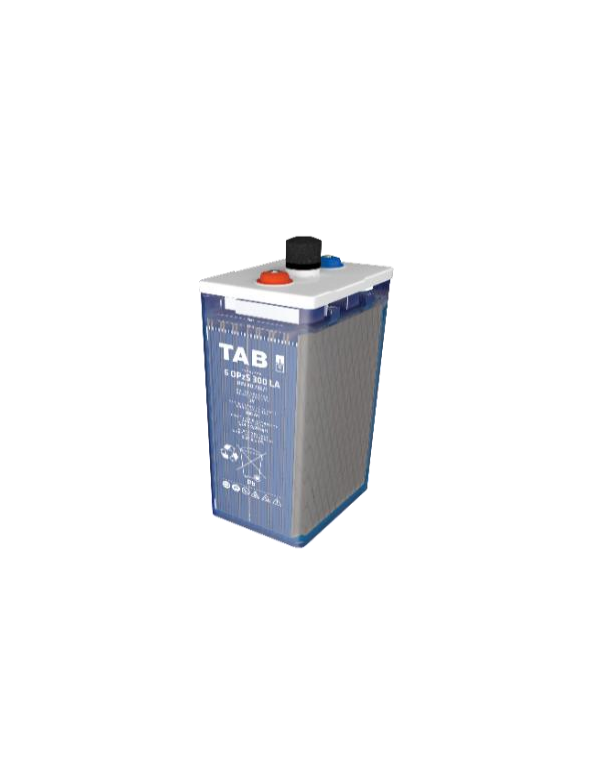
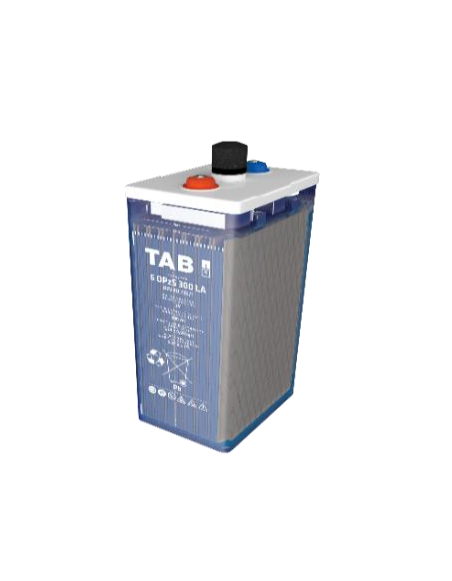
The Stationary Battery Tab 20 OPzS 2500 it's a glass OPzS of 2v and eight poles with a nominal capacity of 2,500 ah according to the DIN denomination, and the first model of the range that exceeds the 3,000 ah in all published regimes and the 4,000 Ah in slow downloads. Their 20 Tubular Positive Plates alloy Bajo Antimony (≤1.65% SB) delivered 3.057 Ah in C12, 3.291 Ah in C24, 4,076 Ah in C120 and 4.217 Ah in C240, figures aimed at large industrial backup systems, data centers, substations, telecommunications and isolated microred. Your internal resistance of 0.125 MΩ and the Short circuit current from 16,200 A They guarantee a very stable power delivery. Share Housing with the 18 OPzS 2250 (487 x 212 x 772 mm). Tubular technology contributes 2,300 cycles 60% of DOD and one 20 year design life in flotation at 20 ° C, and it meets IEC 61427, IEC 60896-11, DIN 40736-1 and EN 50272-2.
Detailed technical characteristics
Electric parameters
- Model: TAB 20 OPzS 2500
- Technology: OPzS, lead-open acid with positive tubular plate
- Nominal voltage: 2V
- Nominal capacity (denomination DIN, C10:) 2,500 Ah
- C240 Up to 1.85 V / element (20 ° C:) 4.217 Ah
- C120 Up to 1.85 V / element (20 ° C:) 4,076 Ah
- C48 Up to 1.80 V / element (20 ° C:) 3.696 Ah
- C24 up to 1.80 V / element (20 ° C:) 3,291 Ah
- C12 up to 1.80 V / element (20 ° C:) 3.057 Ah
- Internal resistance: 0,125 mΩ
- Short circuit current: 16,200
- Positive plates: 20
- Number of poles: 8
Dimensions and weight
- Long: 487 mm
- Width: 212 mm
- High no connectors: 772 mm
- High with installed connectors and covers: 786 mm
- Distance between poles: 110 mm
- Weight with electrolyte (approx.:) 201 kg
- Dry weight (approx.:) 135 kg
Materials and construction
- Positive plates: tube with special alloy bajo Antimony (≤1.65% SB)
- Negative plates: gridboat with optimized low antimony alloy
- Separators: Low resistance microporous PVC
- Electrolyte: diluted sulfuric acid
- Container: Transparent san high resistance to impact
- Cover: ABS robust
- Poles: brass insert M10 with rubber gasket, acid resistant and suitable for impedance measurement
- Connectors: screwed, encapsulated head steel screws; flexible isolated series and rigid optional
- Plugs: antideflages ceramics, also available in funnel format
Service benefits
- Cycles: 2.300 to 60% of DOD, 20 ° C
- Design life: 20 years in Standby, 20 ° C
- Recommended temperature: 10 ° C at 30 ° C
- Maximum temperature: 55 ° C
- Self: approx. 2.5% per month at 20 ° C
- Maximum storage: 3 months at 20 ° C, , 2 months at 30 ° C or 1 month at 40 ° C
- Maintenance: low need of filling
Certifications
- IEC 61427: batteries for photovoltaic energy systems
- IEC 60896-11: open-acid stationary batteries
- DIN 40736-1: elements OPzS
- EN 50272-2: stationary battery security
- European manufacturing with ISO 9001, , ISO 14001 and BS OHSAS 18001
Benefits of the stationary battery Tab 20 OPzS 2500
The 20th OPzS 2500 takes full advantage of the eight-pole housing of 487 x 212 mm: with two positive plaques more that the 18 OPzS 2250 and 17 kg additional, raises the C120 3,780 to 4,076 ah, the C12 2.811 to 3,057 ah and reduces the internal resistance of 0,140 to 0.125 MΩ. It is the natural option when the maximum energy is needed in that format without modifying benches or connectors.
More than 3,000 Ah in any regime
Is the first Tab glass that exceeds 3,000 Ah from the C12 to the C240. This means that it serves as good for a SAI industrial that should hold a major load for half a day as for a isolated that is discharged slowly over several days without sun. A single reference covers both scenarios with a single serial string.
More than 4,000 Ah in slow downloads
With 4,076 Ah in C120 and 4.217 Ah in C240, it is also the first model of the range that exceeds the 4,000 Ah. As a guidance reference, each glass is equivalent to some 5 kWh nominal in C10, and in 120-hour downloads available energy exceeds 8 kwh by glass.
Power and stability
The internal resistance of 0.125 MΩ and the short circuit current from 16,200 A they allow feeding systems with multiple inverters hybrid in three-phase configuration, telecommunications rectifiers or large motor loads maintaining the tension of the bank very stable.
Reliability of tubular plate
The tubular positive plate retains active matter during cycling, unlike flat plate batteries such as aGM batteries. Tab certifies 2,300 cycles 60% of DOD and 20 years of design life in flotation, fundamental guarantees in critical large investment facilities.
Projects with Tab 20 OPzS 2500
Energy and weight estimated
Own guidance calculation on nominal capacity (it is not a manufacturer's data:)
- By glass: some 5 kWh in C10 and some 8.1 kWh in C120
- 24V Bank (12 glasses:) some 60 kWh nominal in C10 and some 2.412 kg electrolyte
- 48V Bank (24 glasses:) some 120 kWh nominal in C10 and some 4,824 kg electrolyte
Logistics and installation
With more than 200 kg by vessel, reception, internal transport and placement must be planned with suitable mechanical means. Benages must be dimensioned for several tons of load, and each marriage between vessels is normally carried out with four connectors, with a distance between 110 mm poles. The short circuit current from 16,200 A determines the power cutting power and continuous disconnectors.
Loading and generation
The charger, rectifier or inverter solar you must admit lead-acid batteries open and configure with the tensions of the TAB manual, which are not listed on the Technical Sheet. In isolated photovoltaic systems, the bank is combined with a large field of solar panels upon structures for solar panels of soil; for smaller installations, our solar kits they are a good starting point.
If you value other technologies, also compare with our lithium batteries or with the gel batteries. On Tienda Solar we help you define the most appropriate storage system, and in the Blog Tienda Solar you will find purchase guides and technical items prepared by experts.
Frequently Asked Questions (FAQ)
1. 20 OPzS 2500 or 24 OPzS 3000?
The 20th OPzS 2500 is the largest model in the housing 487 x 212 mm with poles 110 mm. The 24 OPzS 3000 uses a longer casing (576 mm), polos a 140 mm and weighs some 230 kg, in exchange for reaching 4.620 Ah in C120 facing 4,076 ah. If space or manipulation are limiting, or if you want to maintain the same format as 18 OPzS 2250, the 20 OPzS 2500 is the right choice.
2. How many days of autonomy can a 48V bank offer?
It depends on the consumption and the admitted discharge depth. As an indicative example: a bank of 24 glasses with 4,076 Ah in C120 to 48V storage 196 kwh in that regime; limiting the discharge to 50% they would be some 98 kWh useful, sufficient for some 5 days with a consumption of 20 kWh daily, before loss and corrections per temperature.
3. What must be reviewed when receiving the glasses?
It is convenient to check that there is no damage in the container or leaks, that the vessels have been transported and stored vertical and in a cool place, and write down the date of reception. TAB sets a maximum storage of 3 months at 20 ° C, , 2 months at 30 ° C or 1 month at 40 ° C, so the installation must be planned within those terms.
4. How is the bank's commissioning?
After placing the vessels, the electrolyte level, connectors are assembled by applying tightening torque indicated by the manufacturer and the cargo according to Tab's manual. From there, the initial tensions and densities of each vessel are recorded as a reference for future maintenance.
5. Can it be installed in areas with seismic risk?
Yes, using banks designed to resist seismic efforts, with soil anchors and fastening elements of the vessels. With pesos of more than 200 kg by element, this point is especially important in areas of greatest seismic activity and should be defined in the battery room project.
6OPzS u OPZV for a large capacity technical room?
The OPzS as OPzS 2500 are open liquid electrolyte batteries that require periodic filling, but offer a great robustness and allow directly controlling the state of the electrolyte. The Opzv they use gel electrolyte, do not need to be filled and emit less gases, in exchange for not allowing such direct inspection. You can see alternatives of this type in our gel batteries.
Tap to zoom