Your cart
There are no more items in your cart
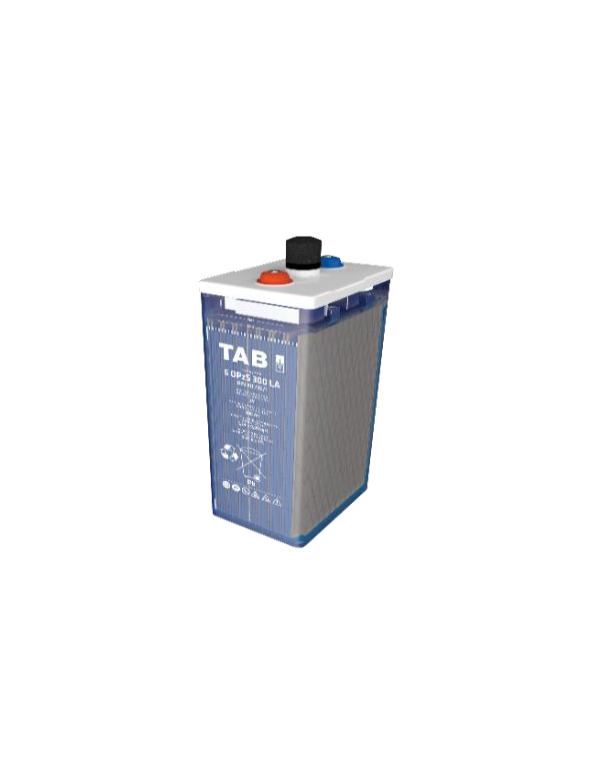
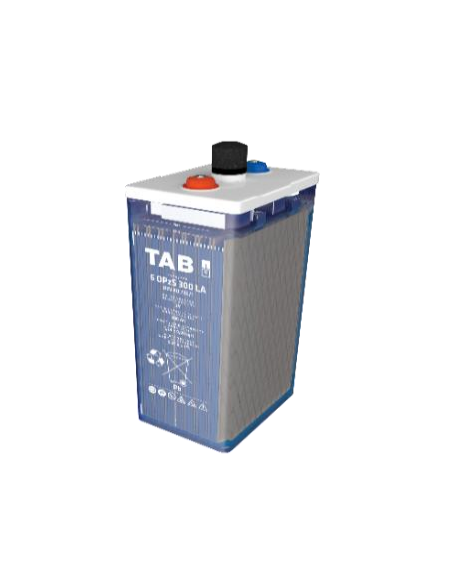

Stationary Battery Tab 250Ah 2V 5 OPzS 250
5OPzS250TB
€156.02
Tax included
The Stationary Battery Tab 5 OPzS 250 It is a glass of 2v with tubular positive plate and alloy Bajo Antimony (≤1.65% SB), Designed for isolated photovoltaic installations and support systems that require maximum reliability. Offers a nominal capacity of 250 ah according to the DIN denomination, which rises up 378 Ah in C120 and 391 Ah in C240, perfect to size banks with several days of autonomy. Its great advantage is durability: 2,300 cycles at 60% depth of discharge and one 20 year design life In flotation at 20 ° C. Meets the rules IEC 61427 for photovoltaic systems, IEC 60896-11 and DIN 40736-1, with certified European manufacturing ISO 9001. The glass of Transparent san Allows you to review the level of electrolyte to the naked eye, and its low Autodescarga of 2.5% monthly United to the scarce need for filling reduces maintenance.
Detailed technical characteristics
Electrical data
- Type: Stationary glass OPzS lead-open
- Nominal voltage: 2V
- Nominal capacity (denomination DIN, C10:) 250 Ah
- CP240 capability (1.85 V / element, 20 ° C:) 391 Ah
- Capacity C120 (1.85 V / element, 20 ° C:) 378 Ah
- Capacity C48 (1.80 V / element, 20 ° C:) 343 Ah
- Capacity C24 (1.80 V / element, 20 ° C:) 307 Ah
- CP12 capacity (1.80 V / element, 20 ° C:) 281 Ah
- Internal resistance: 0,671 mΩ
- Short circuit current: 3,000
- Number of positive plates: 5
- Number of poles: 2
Mechanical data
- Long: 124 mm
- Width: 206 mm
- HIGH (WITHOUT CONNECTORS:) 355 mm
- HIGH (with installed connectors and covers:) 369 mm
- Weight with electrolyte (approx.:) 21 kg
- Dry weight (approx.:) 15 kg
- Material of the glass: SAN (styrene-acrylonitrile) transparent high resistance to impact
- Material of the lid: ABS (acrylonitrile-butadiene-styrene)
- Poles: brass insert M10 with rubber gasket on the lid, acid resistant
- Connectors: screwed, with encapsulated head steel screws and isolated flexible connectors (optional rigid connectors)
- Plugs: antideflages ceramics (available ceramic funnel plugs)
Internal construction
- Positive plate: tubular, lead alloy with low antimony content (≤1.65% SB)
- Negative plate: grid-packet, optimized low antimony alloy
- Separators: Low resistance microporous PVC
- Electrolyte: diluted sulfuric acid
Operation
- Life cycles: 2,300 cycles (60% DOD, 20 ° C)
- Design life: 20 years (flotation in Standby, 20 ° C)
- Recommended working temperature: 10 ° C at 30 ° C
- Maximum temperature: 55 ° C
- Self: approx. 2.5% per month at 20 ° C
- Maximum storage: 3 months at 20 ° C, , 2 months at 30 ° C or 1 month at 40 ° C
- Maintenance: low need of filling
Regulations and certifications
- IEC 61427: batteries for photovoltaic energy systems
- IEC 60896-11: standard lead-acid batteries open
- DIN 40736-1: specification of vessels OPzS
- EN 50272-2: safety requirements for stationary batteries
- European manufacturing with certifications ISO 9001, , ISO 14001 and BS OHSAS 18001
Benefits of the stationary battery Tab 5 OPzS 250
Technology OPzS it remains the reference in storage of lead-acid for facilities that need to operate for decades without surprises. The key is in your tubular positive plate: active matter is contained within tubular covers, which limits its detachment during loading and unloading cycles. The result is a life very higher than that of flat plate batteries, such as aGM batteries o the conventional boot monoblocks.
Durability Measured in cycles and in years
The manufacturer guarantees by design 2,300 cycles 60% of DOD at 20 ° C and 20 years of life in flotation. According to their performance curves, with softer discharges the number of cycles increases in a very significant way: at 20 ° C and with a 20% depth of discharge, the figure it exceeds the 5,000 cycles widely. This makes 5 OPzS 250 in a very profitable long-term option when the bank is sized with margin.
Bajo Antimony, Less Maintenance
The alloy with ≤1.65% antimony reduces water consumption and gasification against traditional open batteries. That's why Tab declares a low need of filling, and the seamless allows you to check the electrolyte level without opening the plugs. The self-cargo of only 2.5% monthly it also facilitates its use in seasonal use facilities, such as country houses or shelters.
Safety and industrial quality
The antideflagers ceramic plugs avoid an external spark that reaches the gases inside the vessel, and connectors with encapsulated head screws they reduce the risk of accidental short circuit during assembly. In addition, the screwing design allows you to perform tension and impedance measurements in each glass, something essential for preventive maintenance of banks of professional battery.
If you are looking for an alternative without maintenance with greater energy density, you can also compare with our lithium batteries or with the gel batteries, who share the robustness of lead with an immobilized electrolyte.
For which facilities is the Tab 5 ideal OPzS 250?
Network self-consumption
It is the classical choice for rural housing, farms, solar pumps and remote stations where there is no access to the electrical network. Combined solar panels and a regulator or inverter-charger compatible with open-acid batteries, guarantees stable supply for long periods.
Backup and Telecommunications Systems
Your fulfillment of the norm IEC 60896-11 and its long life in flotation makes it suitable for uninterrupted feeding systems, telecommunications centers, signaling and standby industrial applications.
How to configure the battery bank
When it is a 2v Glass, banks are formed by connecting elements in series:
- 6 glasses for a system of 12V
- 12 glasses for a system of 24V
- 24 glasses for a system of 48V
As a guideline reference calculated from the nominal capacity (it is not a data from the manufacturer's file), a 24-cup bank at 48V offers some 12 kWh nominal in C10. To choose the inverter solar suitable, make sure that it supports open-acid-acid batteries and allows you to configure the load and equalization voltages recommended by Tab. So many inverters hybrid from the market, they have specific profiles for lead batteries.
The temperature matters
Tab recommends working between 10 ° C and 30 ° C. According to the manufacturer's curves, the available low capacity as the temperature descends, and high temperatures reduce the number of cycles significantly. Install the bank in a protected room, ventilated and without direct exposure to the sun is the best way to take advantage of all its useful life.
If you are designing your full installation, in Tienda Solar you will find all the components you need, and in the Blog Tienda Solar you have purchase guidelines, sizing tips and technical articles developed by photovoltaic experts.
Frequently Asked Questions (FAQ)
1. What does the denomination mean 5 OPzS 250?
The 5 indicates the number of tubular positive plates of the glass and the 250 your nominal capacity in amperios hour according to DIN Nomenclature for batteries OPzS. Acronym OPzS they come from german and describe a stationary element with tubular positive plate and liquid electrolyte.
2. Why is the capacity in C120 greater than the nominal of 250 ah?
The capacity of a battery depends on the download time. The slower the discharge, the more energy it can be extracted. That's why Tab 5 OPzS 250 378 Ah in 120 hours (c120) and 391 AH in 240 hours (c240), usual values to size installations isolated with several days of autonomy, while in 12-hour fast downloads it offers 281 Ah.
3. What maintenance does a battery need OPzS?
Being an open battery, it requires periodically reviewing the electrolyte level and replace it with distilled or demineralized water when necessary. Thanks to his alloy of antimony, Tab indicates a low need of filling, and the transparent vessel facilitates the inspection. It is also recommended to check the tightening of the connections and measure the voltage of each vessel periodically.
4. What load tensions should I configure in the regulator or inverter?
The technical sheet of 5 OPzS 250 does not specify the voltages of flotation, absorption and equalization, so they should be taken from tab Installation and Operation Manual. It is essential that the charging equipment has a profile for lead-acid batteries open (nO AGM or GEL) and, preferably, compensation by temperature.
5. Do you need the Battery Room Special Ventilation?
Yes. During the load, open batteries give off gases, so the premises must be ventilated according to the standard EN 50272-2, that the glass itself meets. The antideflagers ceramic plugs they provide an additional safety layer, but they do not replace adequate ventilation.
6. How much time can I store it before installing it?
TAB sets a maximum storage of 3 months at 20 ° C, , 2 months at 30 ° C or 1 month at 40 ° C. After that period you must receive a maintenance load to avoid sulfation. Your self-discharge is approximately 2.5% per month at 20 ° C.
7. Can I use Tab 5 OPzS 250 in an isolated solar kit?
Of course. Is one of the batteries most used in solar kits isolated for permanent housing, as it meets the norm IEC 61427 specific for photovoltaic systems and offers a life design 20 years.
Tap to zoom