Your cart
There are no more items in your cart
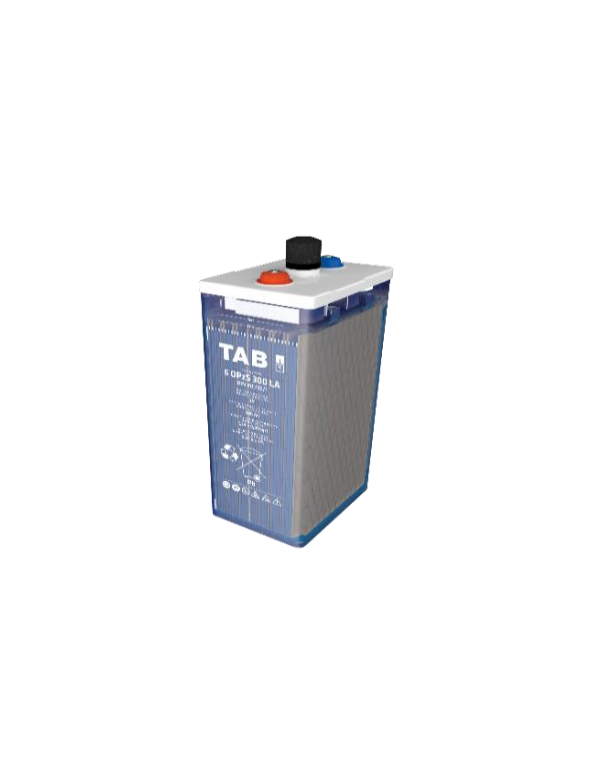
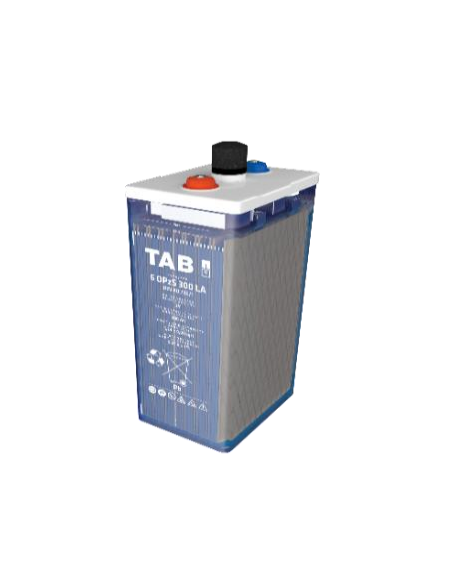

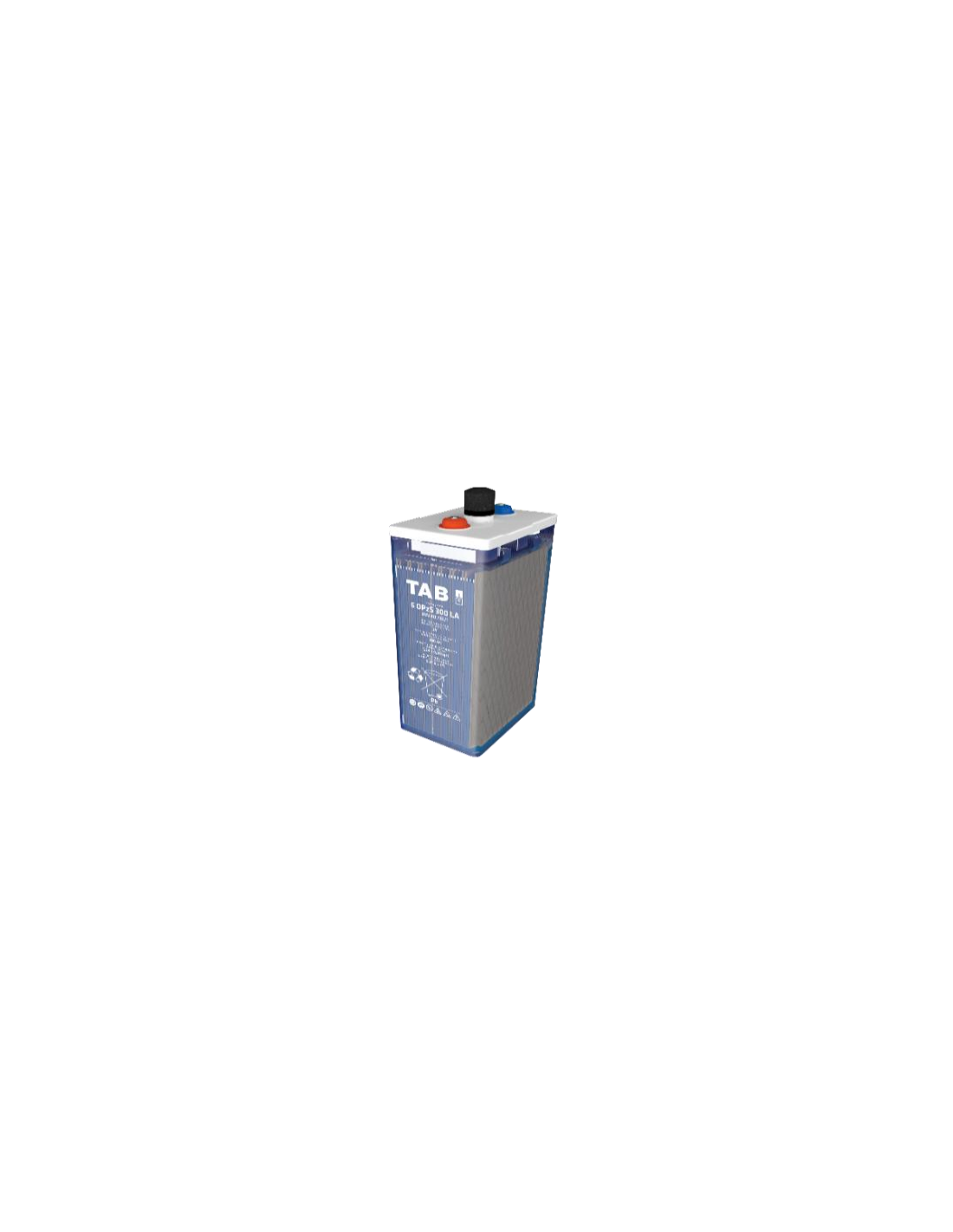
Batería Estacionaria TAB 2000Ah 2V 16 OPzS 2000
16OPzS2000TB
€906.75
Tax included
The Stationary Battery Tab 16 OPzS 2000 is the glass OPzS of 2v greater capacity within the format of six poles of Tab, with 2,000 ah nominal according to DIN denomination. Their 16 Tubular Positive Plates alloy Bajo Antimony (≤1.65% SB) delivered 2.279 Ah in C12, 2.424 Ah in C24, 2,972 Ah in C120 and 3.065 Ah in C240, with the Lower internal resistance of its format: 0.160 MΩ. Your Short circuit current of 12,600 to reflects a power delivery capacity designed for Industrial backup systems, data centers, telecommunications, micro-grids and solar installations isolated from great consumption. Keep the housing 397 x 212 x 772 mm and the distance between poles 110 mm of 14 OPzS 1750 and the 15 OPzS 1875. Tubular technology gives you 2,300 cycles 60% of DOD and one 20 year design life in flotation at 20 ° C, and it meets IEC 61427, IEC 60896-11, DIN 40736-1 and EN 50272-2.
Detailed technical characteristics
Electrical data
- Model: TAB OPzS 2000
- Technology: OPzS, lead-open acid with positive tubular plate
- Nominal voltage: 2V
- Nominal capacity (denomination DIN, C10:) 2,000 Ah
- CP240 capability (1.85 V / element, 20 ° C:) 3.065 Ah
- Capacity C120 (1.85 V / element, 20 ° C:) 2,972 Ah
- Capacity C48 (1.80 V / element, 20 ° C:) 2.710 Ah
- Capacity C24 (1.80 V / element, 20 ° C:) 2.424 Ah
- CP12 capacity (1.80 V / element, 20 ° C:) 2,279 Ah ah
- Internal resistance: 0,160 mΩ
- Short circuit current: 12.600
- Positive plates: 16
- Number of poles: 6
Mechanical data
- Long: 397 mm
- Width: 212 mm
- High no connectors: 772 mm
- High with installed connectors and covers: 786 mm
- Distance between poles: 110 mm
- Weight with electrolyte (approx.:) 155 kg
- Dry weight (approx.:) 109 kg
Design and materials
- Positive plates: tube with special alloy bajo Antimony (≤1.65% SB)
- Negative plates: gridboat with optimized low antimony alloy
- Separators: Low resistance microporous PVC
- Electrolyte: diluted sulfuric acid
- Container: Transparent san high resistance to impact
- Cover: ABS robust
- Poles: brass insert M10 with rubber gasket, acid resistant and suitable for impedance measurement
- Connectors: screwed, with encapsulated head steel screws; flexible isolated series and rigid optional
- Plugs: antideflages ceramics, also in funnel version
Operating conditions
- Cycles: 2.300 to 60% of DOD and 20 ° C
- Design life: 20 years in Standby Flotation at 20 ° C
- Recommended temperature: 10 ° C at 30 ° C
- Maximum temperature: 55 ° C
- Self: approx. 2.5% per month at 20 ° C
- Maximum storage: 3 months at 20 ° C, , 2 months at 30 ° C or 1 month at 40 ° C
- Maintenance: low need of filling
Regulations
- IEC 61427: batteries for photovoltaic systems
- IEC 60896-11: open-acid stationary batteries
- DIN 40736-1: elements OPzS
- EN 50272-2: stationary battery security
- European manufacturing with ISO 9001, , ISO 14001 and BS OHSAS 18001
Benefits of the stationary battery Tab 16 OPzS 2000
The 16th OPzS 2000 complete the format of six poles of Tab with the maximum plates density that supports its housing: 16 tubular positive plates on 397 x 212 mm. In front of the 15th OPzS 1875, it only adds 6 kg by glass, but improves the internal resistance of 0.176 to 0.160 MΩ and raises the short circuit current of 11,500 to 12.600.
Optimized for downloads a few hours
The Tab data show that the advantage of 16 OPzS 2000 on the 15 OPzS 1875 growing the faster the download: +71 Ah in C12 (2,279 compared to 2,208 ah) and +63 Ah in C24, in front of +51 Ah in C120. That is why it is the most indicated option of the format for SAI industrial, data centers and backup systems that must hold high loads for a few hours, while in facilities with very slow downloads the 15 OPzS 1875 offers very close features.
The least internal resistance of the six-pole format
With 0,160 mΩ, it is the six-pole glass with less internal resistance of the range. In banks that feed inverters hybrid three-phase, industrial rectifiers or large motors, this translates into a more stable tension, less heat losses and a better use of stored energy.
2,000 Nominal ah for direct calculations
A nominal capacity of 2,000 Ah facilitates the dimensioning: as an indicative reference, each glass is equivalent to some 4 kWh in C10, and a 48V Bank Round 96 kWh nominal. For engineering and installers, this streamlines the comparison between alternatives and the drafting of offers.
Durability of the tubular plate
The tubular positive plate retains active matter for thousands of cycles, unlike flat plate batteries such as aGM batteries. Tab certifies 2,300 cycles 60% of DOD and 20 years of design life in flotation, key values in facilities whose investment is amortized in the long term.
Bank engineering with Tab 16 OPzS 2000
Energy and weight estimated
Own guidance calculation on nominal capacity (it is not a manufacturer's data:)
- By glass: some 4 kWh in C10 and some 5.9 kWh in C120
- 24V Bank (12 glasses:) some 48 kWh nominal in C10 and some 1,860 kg electrolyte
- 48V Bank (24 glasses:) some 96 kWh nominal in C10 and some 3.720 kg electrolyte
Protections and Safety
The short circuit current of 12,600 to it requires selecting fuses and continuous disconnectors with a cutting power superior to that value, installed as close as possible by the bank. The ventilation of the room must be calculated according to EN 50272-2, and the manipulation of glasses of 155 kg it requires mechanical lifting means.
Loading and generation
The inverter solar, rectifier or charger should admit lead-acid batteries open and configure with the tensions of the TAB manual, which are not listed on the Technical Sheet. In isolated photovoltaic systems, the bank is combined with a field of solar panels high-power structures for solar panels of soil; for smaller projects, our solar kits they are a good starting point.
If you want to value alternatives without maintenance, also compare with our lithium batteries. On Tienda Solar we offer you all the material for large-scale storage projects, and in the Blog Tienda Solar you will find purchase guides and technical items prepared by experts.
Frequently Asked Questions (FAQ)
1. When to choose the 16 OPzS 2000 instead of the 15 OPzS 1875?
When the application has downloads a few hours or high power loads, like a SAI industrial or a backup system. There your advantage is greater: 2.279 Ah in C12 compared to 2,208 ah and 0,160 mΩ facing 0,176 mΩ. In solar installations isolated with very slow downloads, the difference in C120 is small (2.972 against 2,921 ahand the 15 OPzS 1875 it may be enough.
2. What average power can a 48V bank be supported for 12 hours?
As a guiding calculation, a bank 24 glasses with a C12 of 2,279 ah at a nominal tension of 48V storage 109 kwh in that regime, which is equivalent to an average power near 9 kW for 12 hours, before discounting the losses of inverter or rectifier. For a definitive design, the temperature and minimum tension admissible by the equipment should be considered.
3. Does the bank short circuit current than a glass of a glass?
In a bench in series, the tension and internal resistance increase in the same proportion, so that the short circuit current is, approximately, of the same order as that of a glass (12.600), although the resistance of connectors and cables reduces it something. Even so, it is a very high value that must be taken into account when selecting the cutting power of the protections.
4. Are there large-capacity TAB glasses than 16 OPzS 2000?
Yes. Above are the 18 OPzS 2250, the 20 OPzS 2500 and the 24 OPzS 3000, which go through a format of eight poles and longer length. The 16th OPzS 2000 is the largest model that keeps the six-pole housing of 397 x 212 mm.
5. What is it for the Bank's thermographic inspection for?
A thermal chamber allows detecting loose connections or with greater resistance, who heat up more than the rest when current circulates. In large capacity banks, where currents are high, this periodic inspection helps prevent breakdowns and complements measurements of tension and impedance of each glass.
6. What does the transparent container provide?
The glass of Transparent san allows you to check at first glance electrolyte level, the state of the plates and the possible accumulation of sediments in the background without opening the element. This streamlines routine inspections and facilitates detecting any anomaly in a concrete bank of the Bank.
Tap to zoom