Your cart
There are no more items in your cart

Stationary Battery Tab 1875Ah 2V 15 OPzS 1875
15OPzS1875TB
€855.24
Tax included
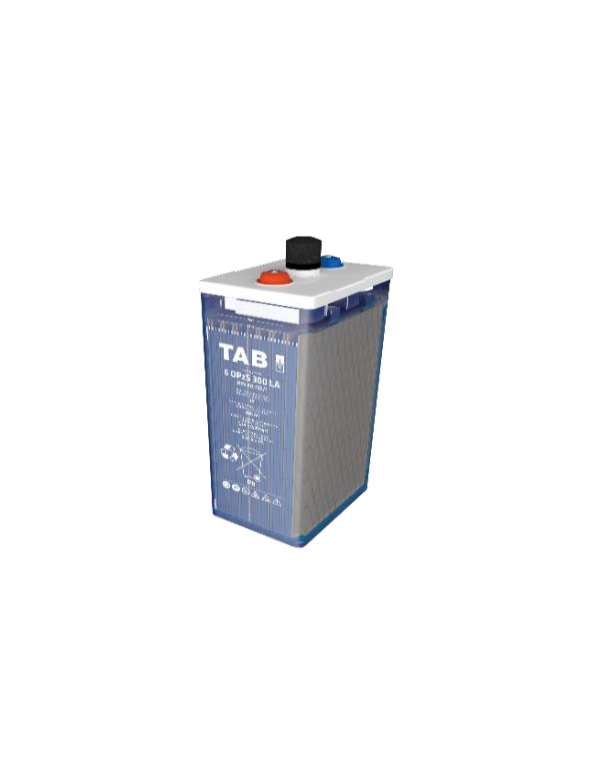
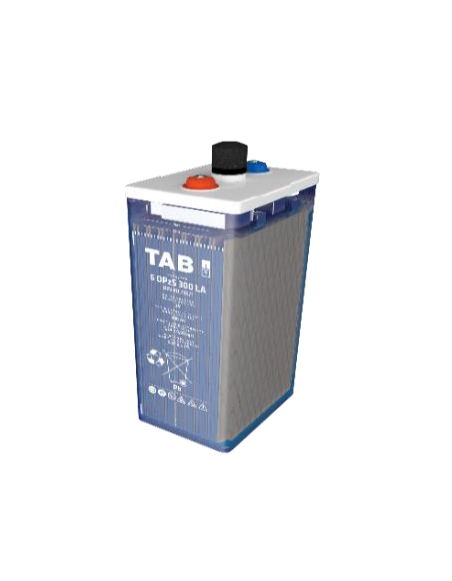
The Stationary Battery Tab 15 OPzS 1875 it's a glass OPzS of 2v and six poles with a nominal capacity of 1,875 ah according to the DIN denomination, and the first model of the range that exceeds the 3,000 ah in download of 240 hours (3.019 Ah in C240). Their 15 Tubular positive plates alloy Bajo Antimony (≤1.65% SB) deliberate 2,921 Ah in C120 and 2.208 Ah in C12, which makes it a reference for large-scale banks in telecommunications, industry, micro-grinds and isolated solar installations with long autonomies. Your internal resistance of 0.176 MΩ and the Short circuit current from 11,500 to They guarantee a stable voltage with very high power loads and equipment. Share housing with the 14 OPzS 1750 (397 x 212 x 772 mm). Offers 2,300 cycles 60% of DOD and one 20 year design life in flotation at 20 ° C, and it meets IEC 61427, IEC 60896-11, DIN 40736-1 and EN 50272-2.
Detailed technical characteristics
Electrical capabilities and parameters
- Model: TAB OPzS 1875
- Technology: OPzS, lead-open acid with positive tubular plate
- Nominal voltage: 2V
- Nominal capacity (denomination DIN, C10:) 1,875 Ah
- C240 Up to 1.85 V / element (20 ° C:) 3.019 Ah
- C120 Up to 1.85 V / element (20 ° C:) 2,921 Ah
- C48 Up to 1.80 V / element (20 ° C:) 2,650 Ah
- C24 up to 1.80 V / element (20 ° C:) 2.361 Ah
- C12 up to 1.80 V / element (20 ° C:) 2.208 Ah
- Internal resistance: 0,176 mΩ
- Short circuit current: 11.500
- Positive plates: 15
- Number of poles: 6
Dimensions and weight
- Long: 397 mm
- Width: 212 mm
- High no connectors: 772 mm
- High with installed connectors and covers: 786 mm
- Distance between poles: 110 mm
- Weight with electrolyte (approx.:) 149 kg
- Dry weight (approx.:) 103 kg
Components
- Positive plates: tube with special alloy bajo Antimony (≤1.65% SB)
- Negative plates: gridboat with optimized low antimony alloy
- Separators: Low resistance microporous PVC
- Electrolyte: diluted sulfuric acid
- Container: Transparent san high resistance to impact
- Cover: ABS robust
- Poles: brass insert M10 and rubber gasket, acid resistant and suitable for impedance measurement
- Connectors: screwed, encapsulated head steel screws; flexible isolated series and rigid optional
- Plugs: antideflages ceramics, also available in funnel format
Service benefits
- Cycles: 2.300 to 60% of DOD, 20 ° C
- Design life: 20 years in Standby, 20 ° C
- Recommended temperature: 10 ° C at 30 ° C
- Maximum temperature: 55 ° C
- Self: approx. 2.5% monthly at 20 ° C
- Maximum storage: 3 months at 20 ° C, , 2 months at 30 ° C or 1 month at 40 ° C
- Maintenance: low need of filling
Certifications
- IEC 61427: batteries for photovoltaic energy systems
- IEC 60896-11: open-acid stationary batteries
- DIN 40736-1: elements OPzS
- EN 50272-2: stationary battery security
- European manufacturing with ISO 9001, , ISO 14001 and BS OHSAS 18001
Benefits of the stationary battery Tab 15 OPzS 1875
The 15 OPzS 1875 is the intermediate step of the six-pole format of Tab, between the 14 OPzS 1750 and the 16 OPzS 2000. The three share the housing, height and distance between poles, so that the designer can refine the bank's ability in steps of 125 oh nominal without changing the design of the room, the bench or connectors. Choosing the Vessel Fair avoids oversizing and optimizes the investment.
More than 3,000 ah for prolonged autonomies
With 3.019 Ah in C240, is the first TAB glass that exceeds the barrier of the 3,000 Ah in downloads of ten days. This feature is especially valuable in remote telecommunications stations, mountain repeaters or signaling systems where the bank must guarantee the supply for long periods without solar contribution or the possibility of frequent maintenance.
Balanced improvement over 14 OPzS 1750
With a positive plate more and only additional 6 kg, the 15 OPzS 1875 increases the C120 2,770 to 2,921 ah, the C12 2,069 to 2,208 ah and reduces the internal resistance of 0.195 to 0.176 MΩ. Short circuit current goes up 11.500, reflection of its ability to feed systems with several inverters hybrid or high-power industrial chargers.
The robustness of tubular technology
The tubular positive plate retains active matter during daily cycling, a decisive advantage over flat plate batteries such as aGM batteries. Tab certifies 2,300 cycles 60% of DOD and 20 years of design life, and their curves confirm that with more moderate downloads life in cycles increases considerably.
Safety and supervision
The antideflagers ceramic plugs, the encapsulated head screws and the transparent container reduce risks and facilitate inspections, while the poles allow measuring tension and impedance in each glass for effective predictive maintenance.
Dimensioning of the bank with Tab 15 OPzS 1875
Energy and weight estimated
Own guidance calculation on nominal capacity (it is not a manufacturer's data:)
- By glass: some 3.75 kWh in C10 and some 5.8 kWh in C120
- 24V Bank (12 glasses:) some 45 kWh nominal in C10 and some 1,788 kg electrolyte
- 48V Bank (24 glasses:) some 90 kWh nominal in C10 and some 3.576 kg electrolyte
Installation and Protections
With 149 kg by vessel, the placement requires mechanical means of lifting and benches sized for the total load. The short circuit current from 11,500 to it should be considered when choosing continuous fuses and disconnectors, and the room should be ventilated according to EN 50272-2.
Cargo and generation equipment
The inverter solar or charger must admit lead-acid batteries open and configure with the load and equalization voltages of the Tab manual, since the technical sheet does not specify them. For generation, combine the bank with a field of solar panels high-power structures for solar panels of soil, or it takes as a basis one of our solar kits isolated.
If you are assessing other storage technologies, also compare with our lithium batteries. On Tienda Solar you will find everything you need for large-scale projects, and in the Blog Tienda Solar you have purchase guides and technical articles developed by experts.
Frequently Asked Questions (FAQ)
1. How do I choose between 14 OPzS 1750, the 15 OPzS 1875 and 16 OPzS 2000?
The three share dimensions (397 x 212 x 772 mm), six poles and distance between poles of 110 mm, so the choice depends on the ability you need. According to TAB data, in C120 they offer 2.770, , 2.921 and 2,972 Ah respectively, and in C12 2.069, , 2.208 and 2,279 Ah ah. The 15 OPzS 1875 is a very interesting balance point: in slow downloads it is very close to 16 OPzS 2000.
2. How is the ability needed by my bank?
A usual starting formula is: capacity (ah) = daily consumption (WH) X autonomy days / (bank tension x maximum discharge depth). The result is compared to the vessel's ability in the actual discharge rate (for example, C120 for isolated installations) and corrected according to the temperature of the premises and the losses of the system.
3. What does C240 capability indicate and when is it used?
The C240 it is the ability to deliver the battery in a constant discharge of 240 hours (ten days) up 1.85 V per element. In Tab 15 OPzS 1875 reaches 3.019 Ah. It is used to size facilities with very long autonomies, such as remote repeaters or signaling systems in areas with little sun.
4. Why is it important to keep a bank maintenance record?
Periodically note the voltage, the density and the impedance of each glass, along with the level of electrolyte and the temperature of the room, it allows detecting trends and locating any element that deviates from the rest. In large banks, this historic is the best tool to extend the life of the whole.
5. What is the difference between flexible and rigid connectors?
TAB supplies as standard flexible connectors isolated, which absorb small differences between vessels and facilitate assembly. As an option there are rigid connectors, which offer a more compact union. In both cases, the steel screws with encapsulated head they reduce the risk of accidental contact during maintenance.
6. Can the bank be monitored at a distance?
Yes, through monitoring systems that measure the tension of each glass, the current of the bank and the temperature, and that send alarms before any anomaly. The design of poles and connectors of Tab, prepared for tension and impedance measurements, facilitates the integration of this type of equipment in critical and remote facilities.
Tap to zoom