Your cart
There are no more items in your cart
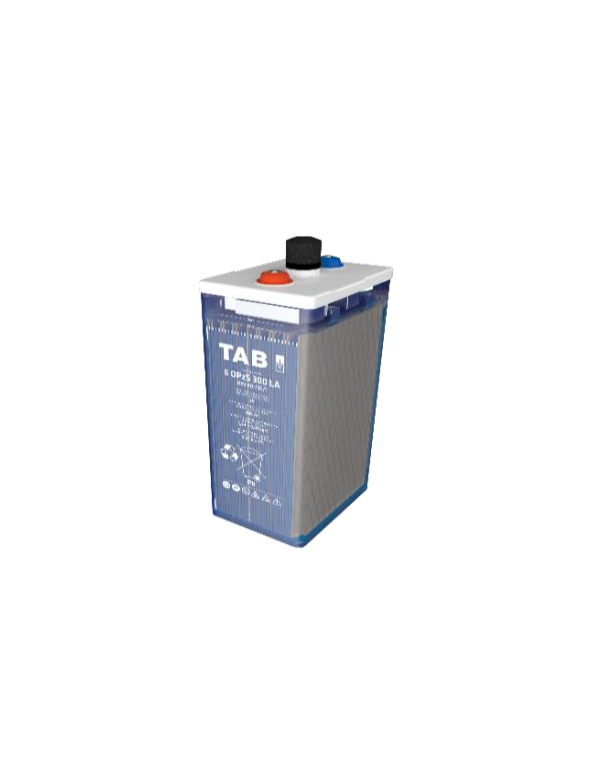
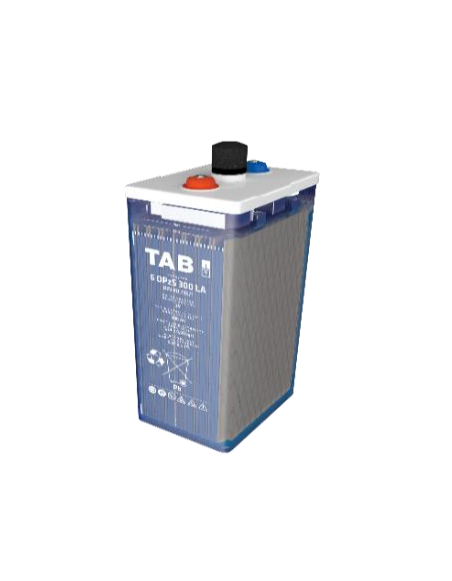

Stationary Battery Tab 300AH 2V 6 OPzS 300
6OPzS300TB
€174.65
Tax included
With 6 tubular positive plates and a nominal capacity of 300 ah according to the DIN denomination, the drums OPzS Tab OPzS 300 It is a stationary glass of 2v Designed for battery banks that must feed isolated homes or critical equipment for many years. In slow downloads reaches 454 Ah in C120 and 470 Ah in C240, which allows you to cover several days without sun with a reduced number of elements. Its construction with alloy Bajo Antimony (≤1.65% SB) and separators Pvc microporous provides 2,300 cycles 60% of DOD and one 20 year design life In flotation at 20 ° C. The Internal resistance of 0.575 MΩ ensures a good response to consumer peaks, and compliance with IEC 61427, IEC 60896-11 and DIN 40736-1, together with its European manufacture, make it a safe bet for both the professional installer and for the end user.
Detailed technical characteristics
Capabilities at 20 ° C
- Nominal capacity (denomination DIN, C10:) 300 Ah
- C240 Up to 1.85 V / element: 470 Ah
- C120 Up to 1.85 V / element: 454 Ah
- C48 Up to 1.80 V / element: 411 Ah
- C24 up to 1.80 V / element: 368 Ah
- C12 up to 1.80 V / element: 338 Ah
Electric parameters
- Technology: OPzS, lead-open acid with positive tubular plate
- Nominal tension of the vessel: 2V
- Internal resistance: 0,575 mΩ
- Short circuit current: 3,500
- Positive plates: 6
- Poles: 2
Dimensions and weight
- Long: 145 mm
- Width: 206 mm
- High no connectors: 355 mm
- High with connectors and covers: 369 mm
- Full weight (approx.:) 26 kg
- Dry weight (approx.:) 19 kg
Materials and components
- Positive plates: tube with special alloy bajo Antimony (≤1.65% SB)
- Negative plates: type type grid with optimized low antimony alloy
- Separators: Low resistance microporous PVC
- Electrolyte: diluted sulfuric acid
- Container: SAN transparent high resistance to impact
- Cover: Sturdy abs
- Terminal: brass insert M10 with rubber gasket, suitable for impedance measurement
- Connections: type screwed with head steel screws isolated, isolated flexible connectors and rigid connector option
- Plugs: ceramics with antideflagrant design, also available in funnel version
Terms of use
- Cycles: 2.300 to 60% depth of discharge and 20 ° C
- Life of design in flotation: 20 years at 20 ° C
- Recommended temperature range: 10 ° C at 30 ° C
- Maximum admissible temperature: 55 ° C
- Autodescarga monthly: approx. 2.5% at 20 ° C
- Life in warehouse: until 3 months at 20 ° C, , 2 months at 30 ° C or 1 month at 40 ° C
- Water replacement: low
Certifications
- IEC 61427 (photovoltaic energy systems)
- IEC 60896-11 (standard lead-acid batteries)
- DIN 40736-1 (vessels OPzS)
- EN 50272-2 (security in stationary batteries)
- European manufacturing plant with ISO 9001, , ISO 14001 and BS OHSAS 18001
Battery benefits OPzS TAB OPzS 300
Choose the 6 OPzS 300 is to bet on an accumulator that is amortized over the years. In front of the monoblock batteries of flat plate, the tubular positive plate retains the active matter and supports the daily cycling of an isolated solar installation, which is right where the aGM batteries they usually exhaust their useful life.
More capacity without occupying more height
Regarding model 5 OPzS 250 of the same range, this glass adds a positive plate and wins 50 Ah Nominal maintaining exactly the same height (355 mmand the same width (206 mm). It only grows 21 mm long (from 124 to 145 mm), so it is a very efficient way to expand the autonomy of a bank without redesigning the closet or the bench.
Deep cycling and long life
The 2,300 cycles 60% of DOD they translate, with a daily cycle, in several years of intensive service. And if the bank is dimensioned for more moderate discharges, the TAB curves show that life in cycles grows significantly: at 20 ° C and with a 20% of DOD, the glass it exceeds the 5,000 cycles widely. That is why many installers slightly overthrow the capacity: the initial extra cost is recovered in durability.
Low internal resistance
With 0,575 mΩ by glass, the 6 OPzS 300 responds well to pump start peaks, refrigerators or tools, minimizing voltage drop in the bank. It is a relevant value when combined with inverters hybrid or inverters- medium power joggers.
Easy inspection and reduced maintenance
The transparent Saint Container let see the level of electrolyte and the state of the plates without dismantling anything. Thanks to his alloy of antimony, the replacement of water is low, and the autodescarga of 2.5% monthly it allows to leave installation unused during short-risk seasons.
Dimensioning a bench with Tab 6 glasses OPzS 300
Regulatory configurations
The vessels of 2V they connect in series until the tension of the system is reached:
- 12V System: 6 glasses (156 kg approx. with electrolyte)
- 24V system: 12 glasses (312 kg approx.)
- 48V System: 24 glasses (624 kg approx.)
As its own guiding calculation (do not appear on the manufacturer's file), a 24-cup bank at 48V stores some 14.4 kWh nominal in C10. The indicated weights are also an approximate amount from the unitary weight of 26 kg, useful to foresee the load capacity of the soil and the bench.
Low voltage disconnection adjustment
The Tab documentation includes reference curves to configure the low voltage disconnection depending on the discharge current and the desired depth of discharge. Programming this threshold correctly in the regulator or in the inverter solar it is one of the keys so that the bank reaches the planned life.
Bank location
The optimal range of work is between 10 ° C and 30 ° C. The heat accelerates aging and reduces available cycles, while cold reduces useful capacity. The ideal is a ventilated technical room, protected from the sun and with acid resistant soil.
To complete your isolated system you can combine these vessels with solar panels of high efficiency or choose directly one of our solar kits. On Tienda Solar we advise you throughout the process, and in the Blog Tienda Solar you will find purchase, comparative and technical articles written by specialists.
Frequently Asked Questions (FAQ)
1. What is the difference between Tab 6 OPzS 300 and 5 OPzS 250?
The 6 OPzS 300 incorporates a positive plate more (6 versus 5), which raises the nominal capacity of 250 to 300 ah and the C120 378 to 454 ah. Share height and width, but the 6 OPzS 300 145 mm long versus 124 mm and weighs 26 kg compared to 21 kg. The number of cycles and design life are the same.
2. What capacity should I use to calculate the autonomy of my insulated installation?
In isolated solar installations is usually worked with C100 or the C120, because they represent slow downloads over several days. For this glass, Tab indicates 454 Ah in C120. For faster downloads, such as a few hours support systems, it is convenient to use C12 (338 ah) or the C24 (368 ah).
3. Can I mix new glasses with others already used in the same bank?
It is not recommended. All the vessels of a serial bank must be same model, manufacturer and antiquity, since an element with different capacity or cargo state is decomposed and accelerates the deterioration of the assembly. If you need to expand capacity, the right thing is to replace the entire bank or create an independent bank.
4. What depth of download is the most recommendable to lengthen your life?
The smaller the daily depth of discharge, the more cycles will offer the battery. Tab certifies 2,300 cycles 60% of DOD, but its curves show that with 40% discharges at 20 ° C, the figure exceeds the 5,000 cycles widely. Dimensioning the bank for moderate daily downloads is the best long-term investment.
5. How does the cold affect the capacity of the battery?
The capabilities of the file are referred to 20 ° C. According to TAB curves, the available capacity decreases progressively as the temperature drops, so that the battery room is available in cold locations or oversize the bank. The recommended range of work is 10 ° C at 30 ° C.
6. Is it compatible with any inverter or load regulator?
It is compatible with teams that allow you to configure a profile for open lead-acid batteries (flooded /OPzS) with phases of absorption, flotation and equalization. Before start-up, check the TAB manual to set the load tensions, since the technical sheet does not specify them.
Tap to zoom