Your cart
There are no more items in your cart
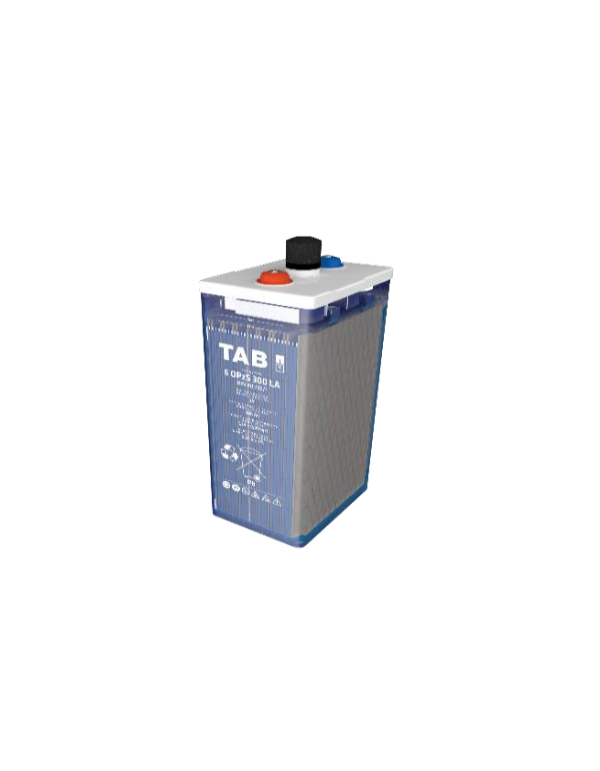
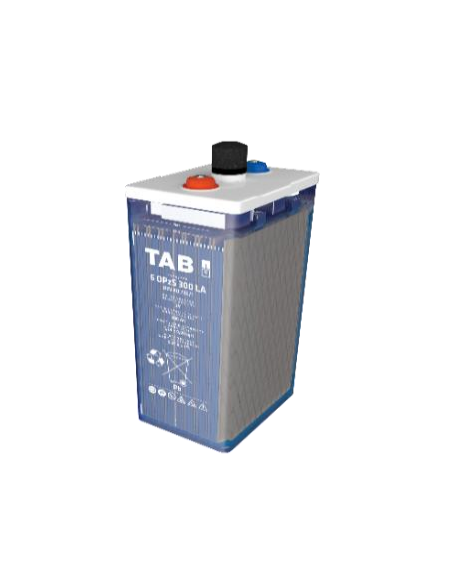

Stationary Battery Tab 1000Ah 2V 10 OPzS 1000
10OPzS1000TB
€469.95
Tax included
The Stationary Battery Tab 10 OPzS 1000 it's a glass OPzS of 2v and four poles with a nominal capacity of 1,000 ah According to DIN denomination, designed for large accumulation banks in isolated solar installations, hybrid systems with generator and industrial backing. Their 10 tubular positive plates alloy Bajo Antimony (≤1.65% SB) delivered 1,592 Ah in C120, 1,656 Ah in C240 and 1.165 Ah in C12, with a internal resistance of 0.261 MΩ and one Short circuit current of 7,750 A They ensure a very stable power delivery. Share housing with 9 OPzS 900 (233 x 210 x 646 mm, poles a 110 mm), so it increases the ability without occupying more space. Its tubular technology provides 2,300 cycles 60% of DOD and one 20 year design life In flotation at 20 ° C. Is certified according to IEC 61427, IEC 60896-11, DIN 40736-1 and EN 50272-2, and it is manufactured in low Europe ISO 9001, ISO 14001 and BS Ohsas 18001.
Detailed technical characteristics
Electrical capabilities and data
- Model: TAB 10 OPzS 1000
- Technology: OPzS, lead-open acid with positive tubular plate
- Nominal voltage: 2V
- Nominal capacity (denomination DIN, C10:) 1,000 Ah
- C240 (1.85 V / element, 20 ° C:) 1,656 Ah
- C120 (1.85 V / element, 20 ° C:) 1.592 Ah
- C48 (1.80 V / element, 20 ° C:) 1.419 Ah
- C24 (1.80 V / element, 20 ° C:) 1.248 Ah
- C12 (1.80 V / element, 20 ° C:) 1.165 Ah
- Internal resistance: 0,261 mΩ
- Short circuit current: 7.750
- Positive plates: 10
- Number of poles: 4
Dimensions and weight
- Long: 233 mm
- Width: 210 mm
- High no connectors: 646 mm
- High with installed connectors and covers: 660 mm
- Distance between poles: 110 mm
- Weight with electrolyte (approx.:) 78 kg
- Dry weight (approx.:) 57 kg
Construction and materials
- Positive plates: tube with special alloy bajo Antimony (≤1.65% SB)
- Negative plates: gridboat with optimized low antimony alloy
- Separators: Low resistance microporous PVC
- Electrolyte: diluted sulfuric acid
- Container: Transparent san high resistance to impact
- Cover: ABS robust
- Poles: brass insert M10 with rubber gasket on the lid, suitable for impedance measurement
- Connectors: screwed, with encapsulated head steel screws; flexible isolated and rigid optional
- Plugs: antideflages ceramics (also in funnel version)
Operating conditions
- Cycles: 2.300 to 60% of DOD, 20 ° C
- Design life: 20 years in Standby, 20 ° C
- Recommended temperature: 10 ° C at 30 ° C
- Maximum temperature: 55 ° C
- Self: approx. 2.5% monthly at 20 ° C
- Maximum storage: 3 months at 20 ° C, , 2 months at 30 ° C or 1 month at 40 ° C
- Maintenance: low need of filling
Regulations
- IEC 61427: batteries for photovoltaic energy systems
- IEC 60896-11: open-acid stationary batteries
- DIN 40736-1: elements OPzS
- EN 50272-2: stationary battery security
- European manufacturing with ISO 9001, , ISO 14001 and BS OHSAS 18001
Benefits of the stationary battery Tab 10 OPzS 1000
The 10 OPzS 1000 is the highest capacity of the housing of 233 x 210 mm. With a positive plate more than 9 OPzS 900 and only additional 5 kg, improve all its values in a balanced way: +108 Ah in C120, , +89 Ah in C12 and an internal resistance that falls down 0.292 to 0.261 MΩ. It is the natural choice when you want to maximize the energy of a bank without changing the bench or connectors.
1,000 Nominal ah: simpler dimensioning
A Round Nominal Capacity of 1,000 Ah simplifies project calculations. As an indicative reference calculated from the nominal data, each glass is equivalent to some 2 kWh in C10, and in slow downloads of 120 hours the energy available round 3.2 kwh by glass. For the installer, this streamlines budgeting and comparison with other technologies.
Power delivery for demanding loads
Your internal resistance of 0.261 MΩ and the short circuit current of 7,750 A allow the bank to maintain a stable tension with inverters hybrid or inverters-cargadores three-phase high power, simultaneously feeding pumps, compressors and industrial equipment without sudden falls.
Certified durability
The tubular positive plate is the basis of the longevity of technology OPzS. In front of the flat plate batteries, like the aGM batteries, supports a very better deeper daily cycling. Tab certifies 2,300 cycles 60% of DOD and 20 years of design life, and their curves confirm that with more moderate discharges the number of cycles increases very significantly.
DIN standard for long-term projects
Compliance with DIN 40736-1 it guarantees that the vessel responds to the standardized specification of elements OPzS, an advantage when planning facilities that must be maintained for decades or renewing existing banks of this same typology.
Integration in large capacity systems
Configurations and estimate of the bank
Own guidance calculation on nominal capacity (it is not a manufacturer's data:)
- 24V Bank (12 glasses:) some 24 kWh nominal in C10 and some 936 kg electrolyte
- 48V Bank (24 glasses:) some 48 kWh nominal in C10 and some 1,872 kg electrolyte
Space, bench and protections
Each glass occupies 233 x 210 mm on the plant 660 mm tall with connectors. With pesos of this order, the bank requires specific benches and a verification of the carrying capacity of the soil. The short circuit current of 7,750 A it must be taken into account when selecting fuses and continuous disconnectors, and the room must comply with the standard EN 50272-2.
Loading and generation
Use a inverter solar or regulator compatible with lead-acid batteries open, configured with the tensions of loading and equalization of the Tab manual, since they are not listed on the Technical Sheet. To recharge a bank of this size you need a generous photovoltaic field: Combine it with solar panels of high power and structures for solar panels of soil or cover, or part of one of our solar kits isolated.
If you prefer a technology without maintenance, you can also compare with our lithium batteries or gel batteries. On Tienda Solar you will find all the material for your project, and in the Blog Tienda Solar you have purchase guides, comparative and technical articles written by experts.
Frequently Asked Questions (FAQ)
1. What is the difference between Tab 10 OPzS 1000 and 9 OPzS 900?
Both share dimensions (233 x 210 x 646 mmand distance between 110 mm poles. The 10 OPzS 1000 incorporates a positive plate more, which raises the C120 of 1,484 to 1,592 ah, the C12 1,076 to 1,165 ah and reduces the internal resistance of 0.292 to 0.261 MΩ, with a weight of 78 kg facing 73 kg.
2. How much energy does each glass store?
As a guiding calculation, multiplying the nominal tension of 2V for the capacity, each glass is equivalent to some 2 kwh with the nominal capacity of 1,000 Ah and some 3.2 kwh with the C120 of 1,592 ah. The really useful energy depends on the depth of discharge that is set to protect the life of the bank.
3. What guarantees compliance with DIN 40736-1?
The DIN 40736-1 it is the reference specification for stationary elements OPzS. Its compliance indicates that the vessel is adjusted to the standardized characteristics of this technology, which brings confidence in its design and facilitates banking planning that must be maintained or renewed over many years.
4. Can I replace a bank with these glasses OPzS ancient of another brand?
In many cases yes, but it is convenient to check the dimensions, the disposition and distance between poles (110 mm) and the type of existing bank connectors. What should not be done is to replace only some vessels: the complete bank must be renewed with elements of the same model to avoid imbalances.
5. Can I expand the bank later?
It is not advisable to add new vessels to a bank in service or connect in parallel Strings of different seniority, since they are decomposated and ages unevenly. That is why it is advisable to dimension the bank from the beginning with a certain margin, taking advantage of the high capacity of the 10 OPzS 1000.
6. What is the use of measuring the impedance of the vessels?
The periodic measurement of the impedance it allows detecting elements that begin to degrade before they affect the whole. The poles of Tab 10 OPzS 1000 are designed to allow this measurement, which facilitates the predictive maintenance in critical, industrial and telecommunications facilities.
Tap to zoom