Your cart
There are no more items in your cart
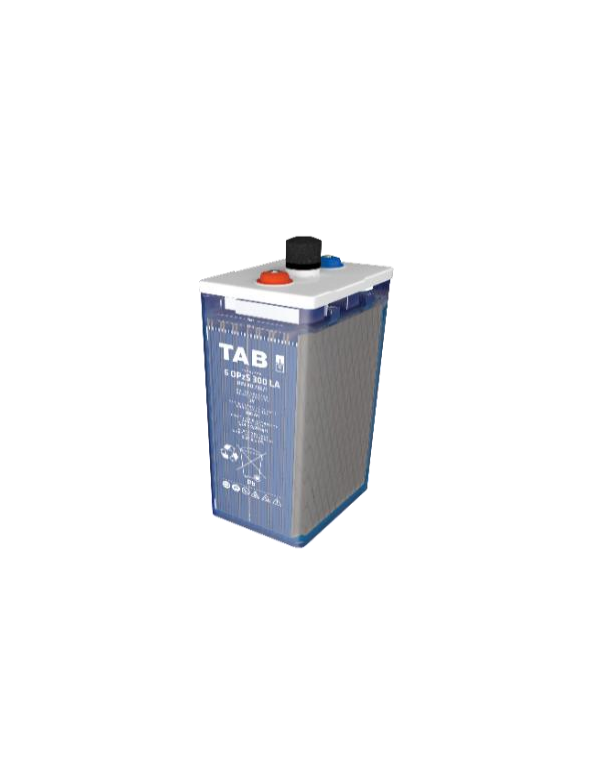
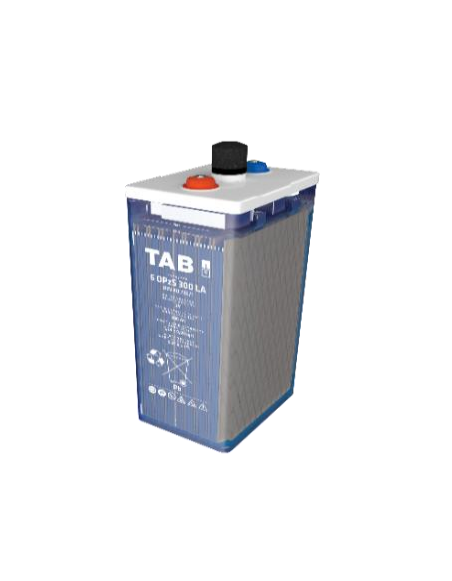

Stationary Battery Tab 3000Ah 2V 24 OPzS 3000
24OPzS3000TB
€1,285.41
Tax included
The Stationary Battery Tab 24 OPzS 3000 is the glass OPzS of 2v greater capacity of the entire Tab range, with 3,000 ah nominal according to the denomination DIN and 24 tubular positive plates distributed in a format of eight poles. Is the only model of the series that exceeds the 4,500 Ah in download of 120 hours (4.620 Ah in C120 and 4.769 Ah in C240and that rubs the 3,750 Ah in 24 hours (3.747 Ah in C24), figures destined for large industrial backup systems, data centers, substations, telecommunications and isolated micro-grinds. Your internal resistance of 0.108 MΩ, the lowest of the range, and the Short circuit current from 18,800 to They guarantee a very stable bank tension even with high power loads. The alloy of Bajo Antimony (≤1.65% SB) brings it 2,300 cycles 60% of DOD and one 20 year design life In flotation at 20 ° C. Meets IEC 61427, IEC 60896-11, DIN 40736-1 and EN 50272-2.
Detailed technical characteristics
Electrical capabilities and data
- Model: TAB 24 OPzS 3000
- Technology: OPzS, lead-open acid with positive tubular plate
- Nominal voltage: 2V
- Nominal capacity (denomination DIN, C10:) 3,000 Ah
- CP240 capability (1.85 V / element, 20 ° C:) 4,769 Ah
- Capacity C120 (1.85 V / element, 20 ° C:) 4620 Ah
- Capacity C48 (1.80 V / element, 20 ° C:) 4.199 Ah
- Capacity C24 (1.80 V / element, 20 ° C:) 3,747 Ah
- CP12 capacity (1.80 V / element, 20 ° C:) 3.508 Ah
- Internal resistance: 0,108 mΩ
- Short circuit current: 18TH
- Positive plates: 24
- Number of poles: 8
Dimensions and weight
- Long: 576 mm
- Width: 212 mm
- High no connectors: 772 mm
- High with installed connectors and covers: 786 mm
- Distance between poles: 140 mm
- Weight with electrolyte (approx.:) 230 kg
- Dry weight (approx.:) 158 kg
Construction
- Positive plates: tube with special alloy bajo Antimony (≤1.65% SB)
- Negative plates: gridboat with optimized low antimony alloy
- Separators: Low resistance microporous PVC
- Electrolyte: diluted sulfuric acid
- Container: Transparent san high resistance to impact
- Cover: ABS robust
- Poles: brass insert M10 with rubber gasket, acid resistant and suitable for impedance measurement
- Connectors: screwed, encapsulated head steel screws; flexible isolated series and rigid optional
- Plugs: antideflages ceramics, also available in funnel version
Operation
- Cycles: 2.300 to 60% of DOD, 20 ° C
- Design life: 20 years in Standby, 20 ° C
- Recommended temperature: 10 ° C at 30 ° C
- Maximum temperature: 55 ° C
- Self: approx. 2.5% per month at 20 ° C
- Maximum storage: 3 months at 20 ° C, , 2 months at 30 ° C or 1 month at 40 ° C
- Maintenance: low need of filling
Regulations
- IEC 61427: batteries for photovoltaic systems
- IEC 60896-11: open-acid stationary batteries
- DIN 40736-1: elements OPzS
- EN 50272-2: stationary battery security
- European manufacturing with ISO 9001, , ISO 14001 and BS OHSAS 18001
Benefits of the stationary battery Tab 24 OPzS 3000
The 24 OPzS 3000 is the ceiling of the TAB range of 2V glasses. With 24 positive plates in a housing 576 x 212 mm, concentrate on a single element the ability with smaller models would require riding several strings in parallel. For engineering, this means simpler banks, less connections and a simpler supervision in large-scale projects.
The greatest capacity in a single glass
In front of the 20th OPzS 2500, the 24 OPzS 3000 add four positive plates and raises the C120 4,076 to 4,620 ah, the C24 3,291 to 3,747 ah and the C12 3,057 to 3,508 ah, maintaining the same height of 772 mm and the same background of 212 mm. It only grows in length 487 to 576 mm.
The lowest internal resistance of the range
With 0,108 mΩ, it is the Tab glass with less internal resistance, and its short circuit current reaches 18TH. In practice, the Bank maintains a very stable tension when feeds telecommunications rectifiers, SAI industrial or several inverters hybrid three-phase working at full load.
A string instead of two
A single Bank of 24 OPzS 3000 4.620 Ah in C120, more than two strings in parallel of 12 OPzS 1500 (2 x 2.226 = 4.452 AH). By avoiding the parallel, the current imbalances between Strings are eliminated, the number of vessels to be monitored are reduced by half and the protections system is simplified.
Durability of the tubular plate
The tubular positive plate confine the active matter and supports cycling much better than the flat plate of the aGM batteries. Tab certifies 2,300 cycles 60% of DOD and 20 years of design life, key figures to amortize an investment of this scale.
Bank engineering with Tab 24 OPzS 3000
Energy and weight estimated
Own guidance calculation on nominal capacity (it is not a manufacturer's data:)
- By glass: some 6 kWh in C10 and some 9.2 kWh in C120
- 24V Bank (12 glasses:) some 72 kWh nominal in C10 and some 2,760 kg electrolyte
- 48V Bank (24 glasses:) some 144 kWh nominal in C10 and some 5.520 kg electrolyte
Logistics and assembly
With 230 kg by vessel, discharge, internal transport and placement require forklift or hoists. Benches and forged must be calculated for several tons, and it is advisable to plan the entry path of the vessels to the room from the project phase.
Connection and Protections
The 24 OPzS 3000 uses a distance between 140 mm poles, different from the 110 mm of the 18th OPzS 2250 and 20 OPzS 2500, so you need your specific connectors. Each union between eight poles vessels is normally performed with four connectors. The short circuit current from 18,800 to determines the power cutting power and continuous disconnectors.
Loading and generation
The charger, rectifier or inverter solar you must admit lead-acid batteries open and configure with the tensions of the Tab manual. In isolated photovoltaic systems, a bank of this capacity is combined with a large field of solar panels upon structures for solar panels of soil; for smaller projects, our solar kits they are a good starting point.
If alternative value without maintenance, also compare with our lithium batteries. On Tienda Solar we advise you on large-scale storage projects, and in the Blog Tienda Solar you have purchase guides and technical items prepared by experts.
Frequently Asked Questions (FAQ)
1. Is the battery OPzS bigger from Tab?
Yes. Inside the range of 2V glasses of Tab, the 24 OPzS 3000 is the largest nominal capacity (3,000 Ah), the one that offers the most capacity in all regimes, from 3.508 Ah in C12 until 4.769 Ah in C240, and the lower internal resistance (0,108 mΩ.)
2. Do the connectors of the 20 serve OPzS 2500?
No. 24 OPzS 3000 has a distance between 140 mm poles, while the 18 OPzS 2250 and 20 OPzS 2500 have 110 mm. In addition, the glass is longer (576 mm), so you need the connectors of your format.
3. How much electrolyte does each glass contain?
The tab of TAB indicates an approximate weight of 230 kg with electrolyte and 158 kg dry As a guidance calculation, the difference suggests some 72 kg of electrolyte by vessel, a data useful to size the retaining trays and the protection means in the battery room.
4. What power can a 48V bank be supported for 24 hours?
As a guiding calculation, 24 glasses with 3.747 Ah in C24 to 48V store some 180 kwh in that regime, which is equivalent to an average power near 7.5 kW for 24 hours, before discounting the losses of inverter or rectifier.
5. What security measures does the room require?
In addition to the ventilation calculated according to EN 50272-2, the room must have acid-resistant floor, trays or retention cubes, restricted and signposted access, absence of sources of ignition and means for the eyewash. The antideflagers ceramic plugs and the encapsulated head screws of Tab complement these measures.
6. How do you behave with heat?
Tab recommends working between 10 ° C and 30 ° C, with a maximum of 55 ° C. Above the recommended range, the manufacturer's curves show a significant reduction in the number of cycles, so in banks this investment it is convenient to the room or, at least, guarantee good ventilation.
Tap to zoom