
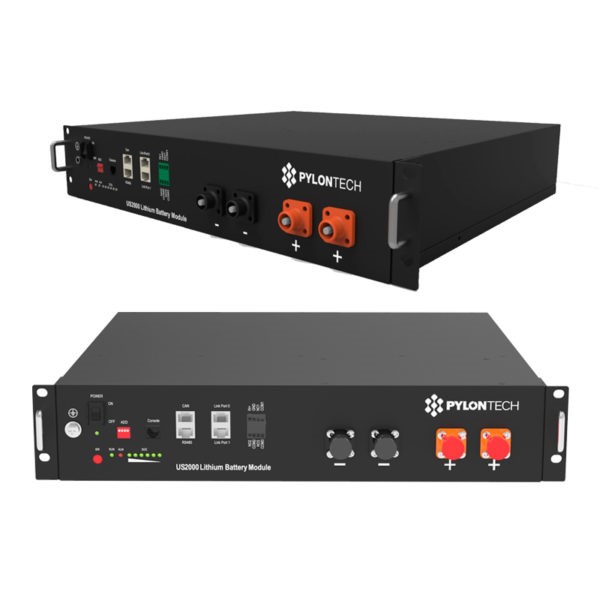
Lithium batteries have become a key solution for energy storage in solar systems. Thanks to their high efficiency, long service life and fast charging capability, they are ideal for self-consumption and backup power applications. In this blog post, we explain what lithium batteries are, how they work, their advantages and disadvantages, and why they are the best choice for photovoltaic systems.
What is a lithium battery?
A lithium battery is an electrochemical device that stores energy through reactions between lithium and other materials. The most common types in solar energy are lithium iron phosphate (LiFePO4) and lithium-ion (Li-ion) batteries. These batteries have a high energy density, which means they can store more energy in less space.
How they work
Lithium batteries work by transferring lithium ions between the anode and the cathode through an electrolyte. During charging, the ions are stored in the anode; during discharging, they move back to the cathode, generating an electric current. This process is highly efficient and allows many charge cycles without significant loss of capacity.
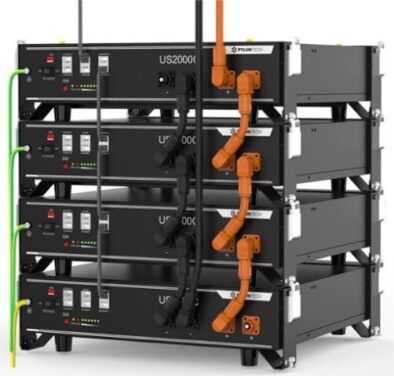
Advantages of lithium batteries in solar energy
– High charge and discharge efficiency (up to 95%).
– Long service life (over 6,000 cycles in LiFePO4 models).
– Low self-discharge rate.
– Fast charging capability.
– Light weight and compact size.
– Greater safety against overheating and short circuits.
Disadvantages and considerations
– Higher price compared to lead-acid batteries.
– Require a battery management system (BMS) to prevent overcharging.
– Sensitive to extreme temperatures.
– More complex recycling.
Applications in solar systems
Lithium batteries are used in:
– Residential self-consumption systems.
– Off-grid installations.
– Commercial and industrial projects.
– Electric vehicles and mobile solutions.
– Residential and commercial hybrid self-consumption systems with grid-tied solar inverters.
Frequently asked questions
How long does a lithium battery last?
It depends on the model and usage, but LiFePO4 batteries can last more than 10 years or 6,000 charge cycles.
Is a lithium battery safe?
Yes, especially lithium iron phosphate batteries, which offer high thermal and chemical stability. Modern systems also include a BMS for protection. The BMS (Battery Management System) controls the battery’s operating parameters, such as temperature, charge/discharge current and operating voltage.
What maintenance do they require?
Very little. Unlike lead-acid batteries, they do not need periodic maintenance. It is important to keep them within suitable temperatures and avoid deep discharges.
Are they compatible with all inverters?
Not all of them. It is important to check compatibility with the solar inverter, especially in terms of voltage and communication protocols.
Conclusion
Lithium batteries are both the future and the present of energy storage in solar systems. Their efficiency, durability and safety make them the best choice for anyone seeking energy independence and sustainability. At Tienda Solar,

Pol Parareda Farriol es ingeniero industrial y MBA, con más de 15 años de experiencia internacional en el sector de la energía solar fotovoltaica y las energías renovables. Actualmente Director en Tienda Solar, trabaja en el desarrollo y gestión de soluciones de autoconsumo, sistemas fotovoltaicos y almacenamiento con baterías para el mercado residencial y profesional.
A lo largo de su carrera ha ocupado puestos de responsabilidad en empresas líderes del sector como Weidmüller, SunPower, Sunco Capital y Hilti, desempeñando funciones en ingeniería, desarrollo de producto, operaciones, O&M, gestión comercial y dirección estratégica de proyectos solares, tanto a pequeña escala como en grandes plantas fotovoltaicas internacionales.
Ha liderado proyectos y equipos en Europa, Latinoamérica y Asia, participando en el desarrollo de más de cientos de MW en proyectos solares, negociación de PPAs, estrategias EPC y optimización de sistemas fotovoltaicos. Además, ha sido docente de energía solar fotovoltaica en programas de máster en energías renovables en instituciones como la Universidad Carlos III de Madrid