In the solar energy industry, we are often dazzled by the efficiency of a state-of-the-art panel or the aesthetics of a hybrid inverter. However, at Tienda Solar we are aware that the backbone of any installation that aims to last more than 25 years is not in the generation, but in the safety and management of direct current (DC). Buying Weidmüller in 2026 represents the choice of German precision engineering to protect the most expensive assets of your PV plant.
Expert Opinion:
“When we talk about Weidmüller in 2026, we are validating an installation for those who prioritize long-term reliability over nickel-and-diming. This product is indispensable in systems handling high power and voltages of up to 1000V or 1500V DC. A crucial technical detail is its heat degradation management; by using copper tracks on PCB instead of cables, thermal dissipation is much more efficient, preventing components from suffering under the summer sun.
One limitation that the user often forgets is the need for proper grounding; the best surge protector from Weidmüller is useless if the grounding resistance of the house is poor. On the other hand, as opposed to closed brands that force the use of their own integrated surge protectors (sometimes difficult to repair), Weidmüller offers an open and modular architecture. My recommendation based on durability is clear: if you are installing high-efficiency panels or island/back-up systems, don’t skimp on the “firewall” of your system. The robustness of its enclosures and the precision of its PUSH IN contacts ensure that your plant’s efficiency is not diminished by brownouts or unexpected shutdowns, protecting both your pocketbook and the integrity of your home from any electrical contingency.”
Weidmüller and the PV Next Series: The New Era of Connectivity
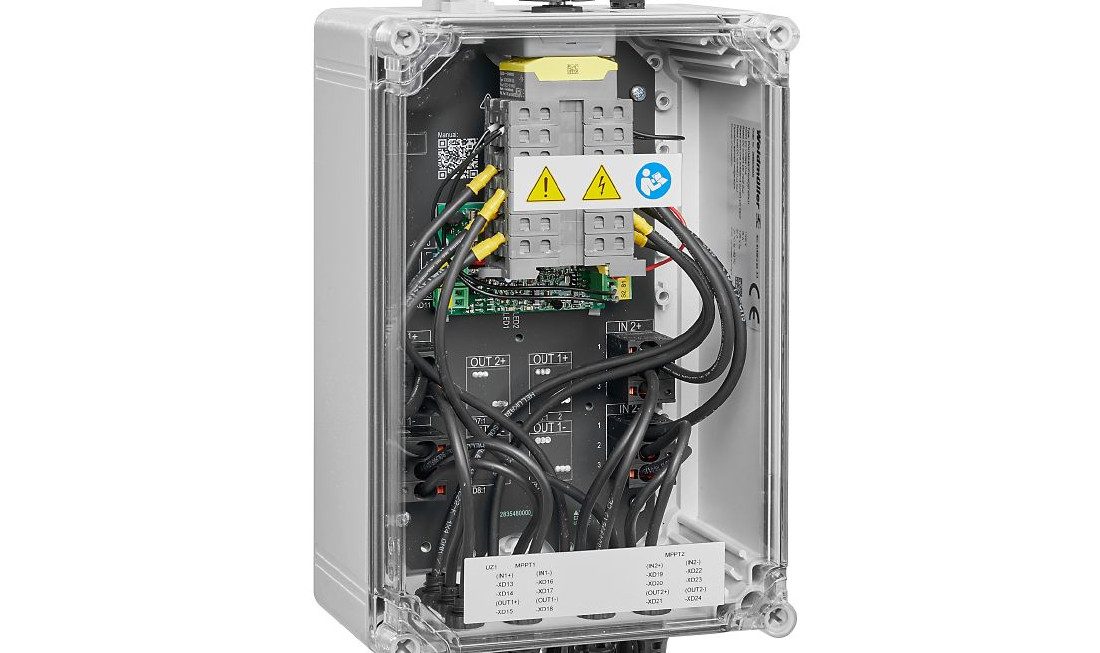
Most failures in solar systems are not caused by faults in the panels, but by poor connections, arcing or overvoltages. This is where Weidmüller makes the difference with its PV Next concept, the first combiner box platform based on a standardized, encapsulated printed circuit board (PCB) design.
By eliminating internal manual wiring, Weidmüller not only improves thermal efficiency, but also drastically reduces the risk of fires caused by loose terminals. This industrial approach taken to the residential and commercial sector ensures a cleaner, faster and, above all, safer installation.
To ensure the best value for money, it is vital to understand which components are critical in your electrical scheme. On our website, we have the solutions that really make a difference in LCOE (Levelized Cost of Energy):
1. PV Next Combiner Boxes (Combiner Boxes)
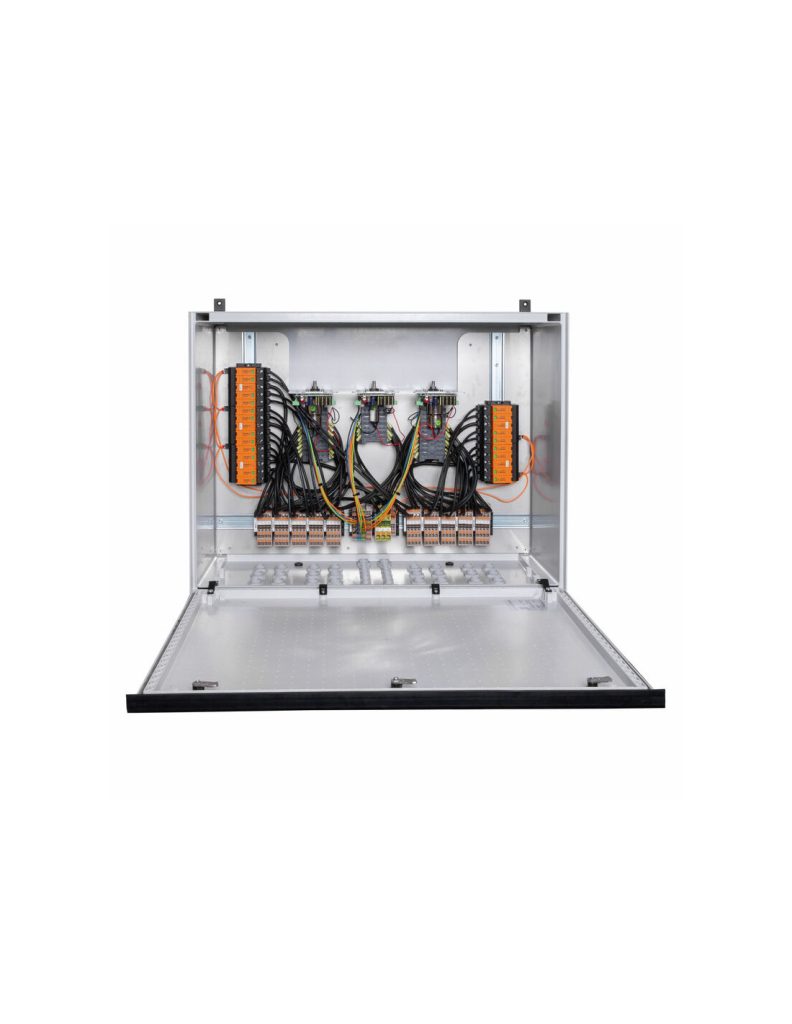
These boxes are not simple plastic boxes. They are power management boxes that bundle the strings from your panels before they reach the inverter.
- Multi-channel capability: Available for configurations from 1 to 12 MPPT.
- Compact Design: Ideal for wall mounting under panels, saving meters of copper cable.
- Integrated Protection: Fuses (if required) and load break switches are included as standard.
2. Interruptor de Bombero (Fireman Switch)
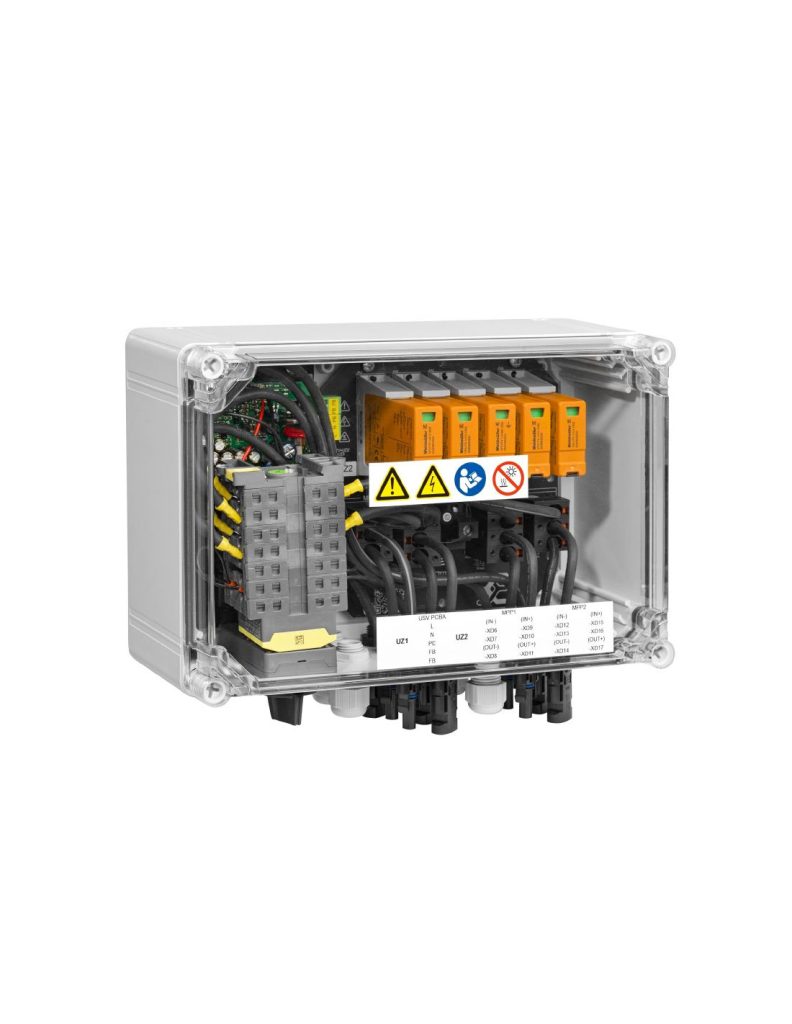
In a real sustainability facility, the safety of people comes first.
- Critical Function: If there is a fire, even if you cut the main switchboard, the cables coming down from the roof still have 1000V voltage.
- Operation: The Weidmüller switch detects the lack of AC voltage and automatically cuts off the DC current flow at the point closest to the panels, allowing safe intervention.
3. Surge Protectors (SPD) Class I+II
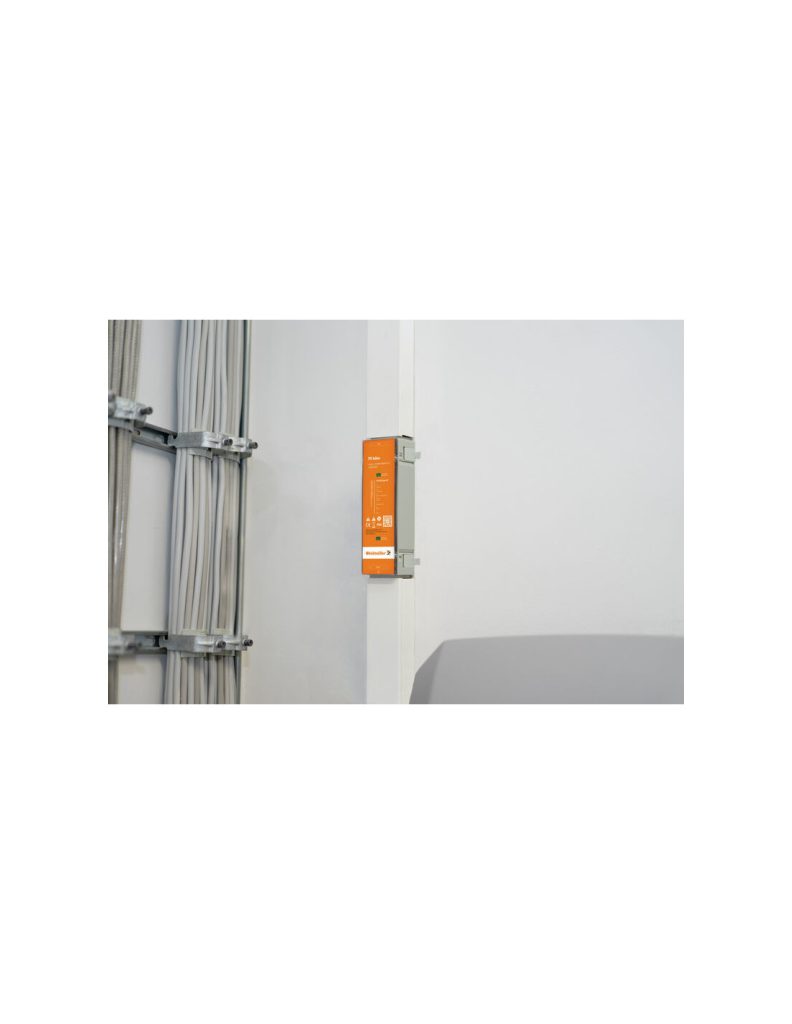
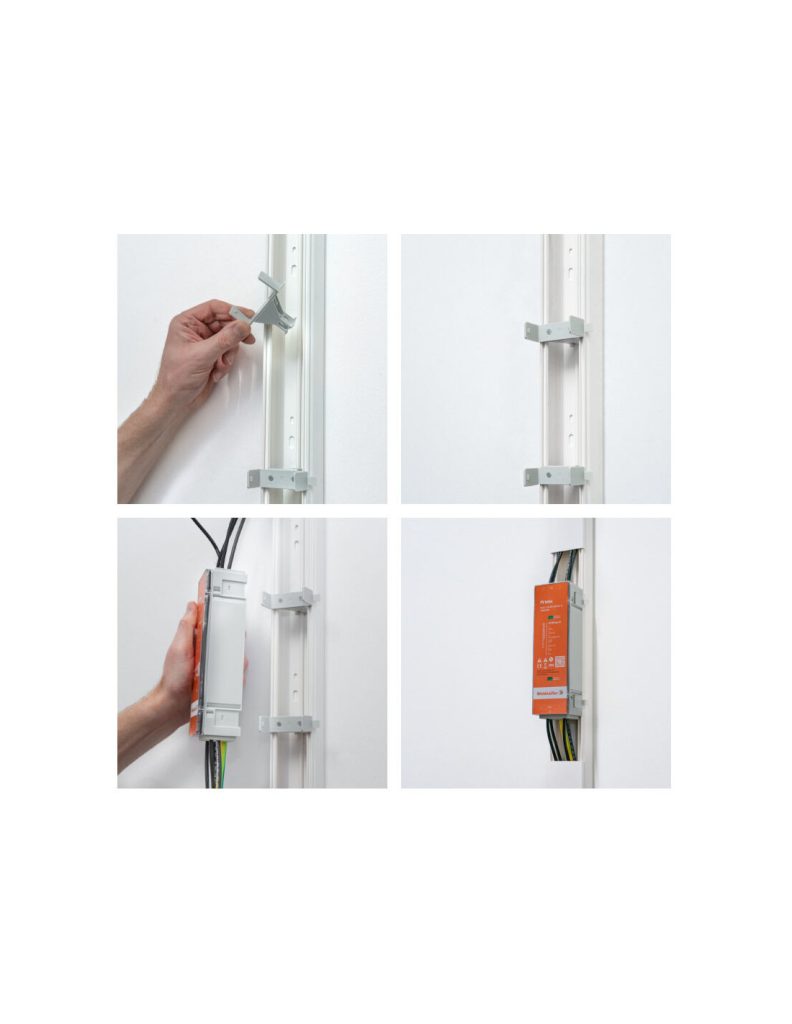
Lightning does not need to strike your home directly to destroy your inverter. A nearby discharge creates an induced voltage spike that can fry equipment electronics. Weidmüller protectors use high-performance varistor technology to shunt this energy to ground in microseconds.
4. WM4C connectors (PUSH IN)
Traditional crimping is a source of errors. Weidmüller’s PUSH IN technology allows panel wires to be connected simply by pushing, ensuring a watertight and durable connection without the need for special tools.
Technical Analysis: Benefits and Applications
| Feature | User Benefit | Application |
| PCB Technology | Lower resistance and lower heat. | High power installations. |
| IP65/IP67 grade | Total resistance to rain and dust. | Outdoor (Roofs and decks). |
| IEC Certification | Regulatory compliance assurance. | Industrial and legal projects. |
| Auxiliary Contacts | Remote fault monitoring. | Preventive maintenance. |
Use in different scenarios:
- Residential Housing: Protect your hybrid inverter and batteries from voltage spikes. A PV Next Mini box is enough to sleep easy.
- Industrial Ships: Where short-circuit currents ($I_{sc}$) are very high, the robustness of Weidmüller disconnectors prevents catastrophic arcing.
- High Electrical Activity Zones: If you live in an area prone to thunderstorms, Class I+II arresters are mandatory in order not to lose the inverter warranty.
Proactive Safety: The Fireman’s Switch and the Evolution of European Regulations
When analyzing the best value for money in protection components, we cannot ignore the legal trend that is transforming the sector in the European Union. While in Spain, Portugal or Italy the installation of a Fireman Switch has traditionally been a good practice recommendation, in more mature markets such as France or Germany its use is already a strict requirement by law (as dictated by the NF C 15-712-1 standard in French territory). This regulatory divergence is about to disappear; with southern Europe’s leadership in photovoltaic deployment, the standardization of these safety devices is expected to become mandatory in the short term for any residential or industrial installation. The reason is purely operational: in case of fire, even if the AC supply is cut off, the panels continue to generate voltages of up to 1000V DC. The Weidmüller switch acts as an automatic sentinel which, upon detecting the absence of mains power, disconnects the electrical flow on the roof, ensuring that emergency crews can intervene without risk of electrocution. Anticipating this obligation by purchasing certified equipment is not only a decision of sustainability and preventive ethics, but a smart financial maneuver to avoid costly system upgrades when the law is finally harmonized across the peninsula.
PUSH IN Technology: The end of hot spots and maintenance
In a photovoltaic installation, direct current (DC) is relentless. Unlike alternating current, DC tends to generate sustained arcing at the slightest imperfection in the connection. The traditional screw terminal method presents a critical problem: with temperature cycling (the heat of the day and the cold of the night), metals expand and contract, causing the screws to loosen over time. A loose screw increases resistance, generates heat and, in the worst case, starts a fire.
Weidmüller has eradicated this risk with its patented PUSH IN technology. This system uses a high-pressure stainless steel spring that keeps the cable tightened consistently and evenly, regardless of vibrations or thermal changes.
- Error-free installation: No torque tools or highly specialized personnel are required to ensure “perfect tightening”. Just insert the cable.
- Zero Maintenance: As it is a spring-loaded connection, it does not require periodic retightening, which drastically reduces the long-term operating cost.
- Active Safety: Drastically minimizes the occurrence of electrical arcing, protecting the integrity of the combiner box and the inverter.
Strings configuration: How to choose the protection according to your Inverter?
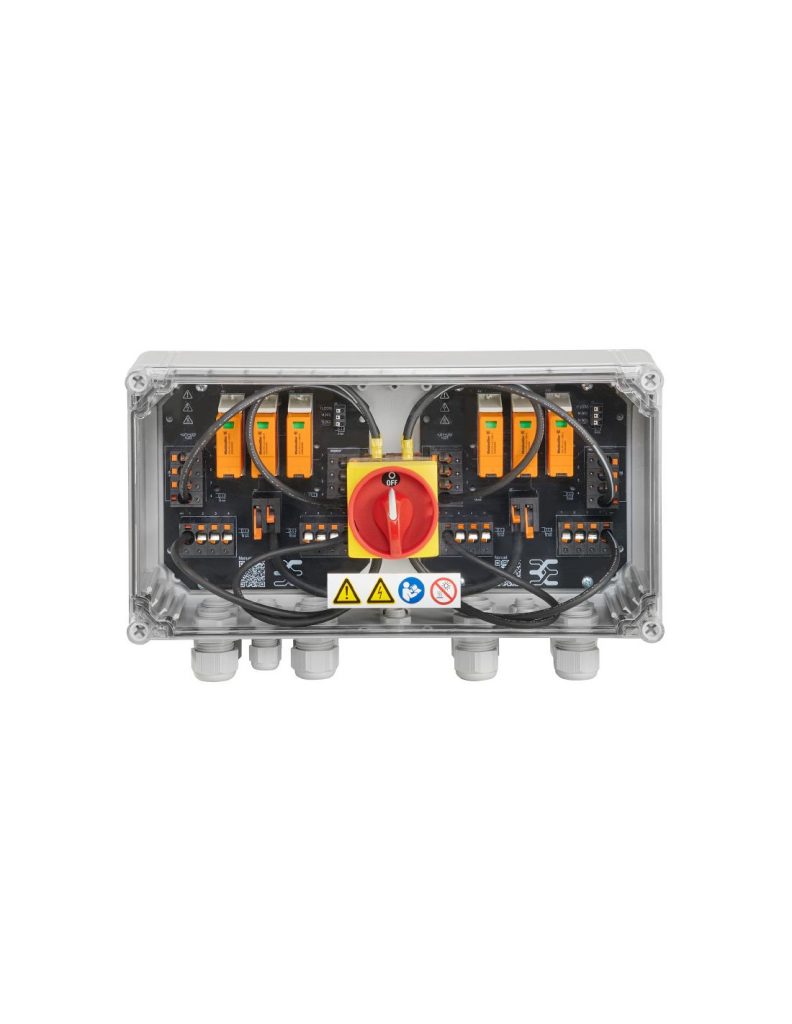
One of the most common mistakes when buying protections is not aligning the capacity of the box with the specifications of the inverter and panels. With the advent of high-efficiency panels (such as N-type or TOPCon) over 550W, short-circuit currents ($I_{sc}$) have skyrocketed in intensity.
To choose the right product on our website, you should look at two factors:
- Number of MPPT: If your inverter has 2 maximum power trackers, you need a box that manages 2 independent inputs so as not to lose the efficiency of individual monitoring. The PV Next Mini series is the queen in the residential sector because of its compact size.
- String current: Weidmüller designs its enclosures to withstand the high currents of modern panels. While generic protections can overheat when working close to their limits, Weidmüller’s components offer a thermal safety margin that ensures that the system does not shut down at midday irradiation peaks.
Whether your installation is commercial or industrial, Weidmüller’s string boxes allow you to group multiple lines, protecting each one with specific fuses, which prevents a failure in one panel from affecting the entire plant’s production.
Open Standards: Total Freedom and Goodbye to the “Captive Effect”.
A growing problem in the solar industry is the “closed ecosystem”. Some premium inverter brands force you to use their own proprietary protection boxes or connectors, which ties your hands when it comes to future repairs or upgrades.
Weidmüller is committed to interoperability. Its products are compatible with 99% of the inverters on the market (Huawei, Fronius, Deye, Solis, Sungrow, etc.).
- WM4C connectors: They are fully compatible with the MC4 standard, but enhanced with the brand’s quick connect technology.
- Technological Independence: If in 10 years time you decide to change your inverter to a new technology (such as Perovskite), the Weidmüller protections will still be perfectly valid. This ensures that your initial investment in safety infrastructure is cross-cutting and does not expire with the generation equipment.
- Reusability: As a global industry standard, finding replacement cartridges for your surge arresters is simple and cost-effective, unlike proprietary, closed-brand replacements.
Frequently Asked Questions (FAQ)
1. Why is Weidmüller more expensive than a piece-assembled box?
Because you are not buying individual components, but a laboratory-certified solution. The savings in assembly time (up to 75%) and the elimination of fire risks more than compensate the initial investment.
2. Are these products compatible with inverters of other brands?
Absolutely. Weidmüller protections are universal. They work perfectly with Huawei, Fronius, Deye, Solis or Sungrow, eliminating the “captive effect” and improving the protection that usually comes as standard (which is often insufficient).
3. What maintenance do PV Next boxes require?
Practically none. Only an annual visual inspection of the surge arrester status indicators is recommended. If the indicator is red, simply replace the cartridge without rewiring.
4. What is the real difference between a Type I and Type II surge protector?
It is a question of the energy they can absorb. A Type I protector is designed to withstand a direct lightning strike (wave 10/350 µs), while Type II protects against indirect surges or mains switching (wave 8/20 µs). Weidmüller’s PV Next boxes usually combine both(Type I+II), offering total protection: they are the shield against the lightning strike on your roof and the lightning strike on the transformer in your street.
5. Are the WM4C connectors really compatible with the MC4 connectors of my panels?
Yes, they are fully mechanically compatible under IEC 62852. However, the advantage of Weidmüller is its internal contact technology, which offers lower resistance. This means that, even if they fit your existing panels, the Weidmüller connection will suffer less heat degradation, keeping transmission efficiency intact for decades.
6. Why choose a PCB-based enclosure instead of a hand-wired one?
Manual DC wiring is prone to errors: a poorly crimped wire or a loose screw is the source of 90% of solar fires. Weidmüller’s PCB (Printed Circuit Board) design standardizes connections, eliminates wire clutter and ensures that every component is in exactly the right place for optimal heat dissipation. It’s the difference between a handcrafted prototype and a precision industrial machine.
7. What maintenance does the fireman’s switch require?
Practically none, and that is its great virtue. The switch performs a “passive safety” function. It is only recommended an annual test by cutting the general current of the house to verify that the strings are disconnected correctly. As it is an automatic reconnection system, once the power is restored, the equipment will start working again without you having to intervene.
8. Can I install this equipment outdoors in direct rain?
Absolutely. Weidmüller devices are IP65 and IP67 certified. This means that they are completely dust-tight and resistant to powerful jets of water. They are designed to withstand the harshest weathering, although we always recommend installing them under the shade of the panels to maximize their service life and avoid extreme thermal stress.
Ready to take the protection of your PV system to the next level? Don’t miss the Weidmüller products on our website at an unbeatable price!

Pol Parareda Farriol es ingeniero industrial y MBA, con más de 15 años de experiencia internacional en el sector de la energía solar fotovoltaica y las energías renovables. Actualmente Director en Tienda Solar, trabaja en el desarrollo y gestión de soluciones de autoconsumo, sistemas fotovoltaicos y almacenamiento con baterías para el mercado residencial y profesional.
A lo largo de su carrera ha ocupado puestos de responsabilidad en empresas líderes del sector como Weidmüller, SunPower, Sunco Capital y Hilti, desempeñando funciones en ingeniería, desarrollo de producto, operaciones, O&M, gestión comercial y dirección estratégica de proyectos solares, tanto a pequeña escala como en grandes plantas fotovoltaicas internacionales.
Ha liderado proyectos y equipos en Europa, Latinoamérica y Asia, participando en el desarrollo de más de cientos de MW en proyectos solares, negociación de PPAs, estrategias EPC y optimización de sistemas fotovoltaicos. Además, ha sido docente de energía solar fotovoltaica en programas de máster en energías renovables en instituciones como la Universidad Carlos III de Madrid